



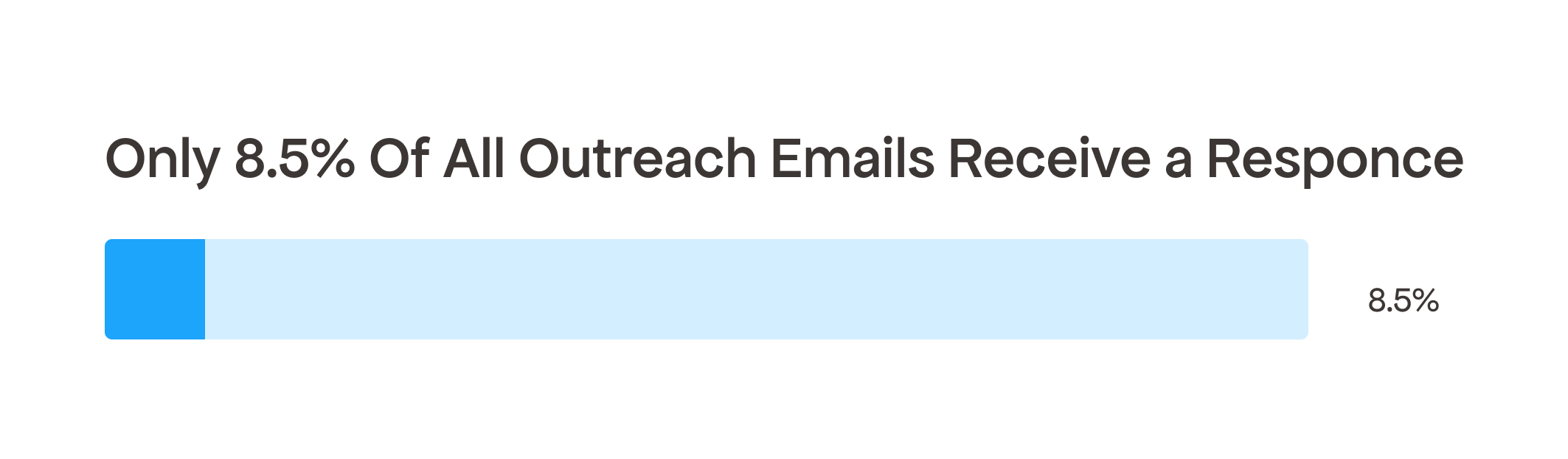
Most cold emails never get a reply. They land in inboxes, sit unread for a few hours, and quietly get deleted.
But here's the truth: outreach email does work — when you use the right type for the right situation. The biggest mistake most senders make isn't poor copywriting. It's sending the wrong kind of email to the wrong person for the wrong reason.
A sales pitch to a journalist. A guest post request without reading their blog. A "just checking in" follow-up that adds zero value. These aren't just ineffective — they actively hurt your sender reputation.
Understanding the different types of outreach emails gives you a framework to be intentional, relevant, and human in every message you send. That's what drives replies.
In this guide, we break down 12 email outreach types, when to use each one, what a strong example looks like, and how to avoid the most common mistakes. Whether you're building links, closing deals, or reaching out to investors, there's a format built for your goal.
Let's get into it.
What Is Email Outreach?
Email outreach is the practice of sending targeted, personalized emails to people you haven't spoken with before or haven't spoken with in a while to start a conversation, build a relationship, or achieve a specific goal.
It's different from email marketing. Marketing emails go to subscribers who opted in. Outreach emails go to a targeted individual with a specific reason for reaching out.
Done well, email outreach is one of the highest-ROI channels available. Done poorly, it's spam.
The difference? Relevance, personalization, and using the right outreach type.
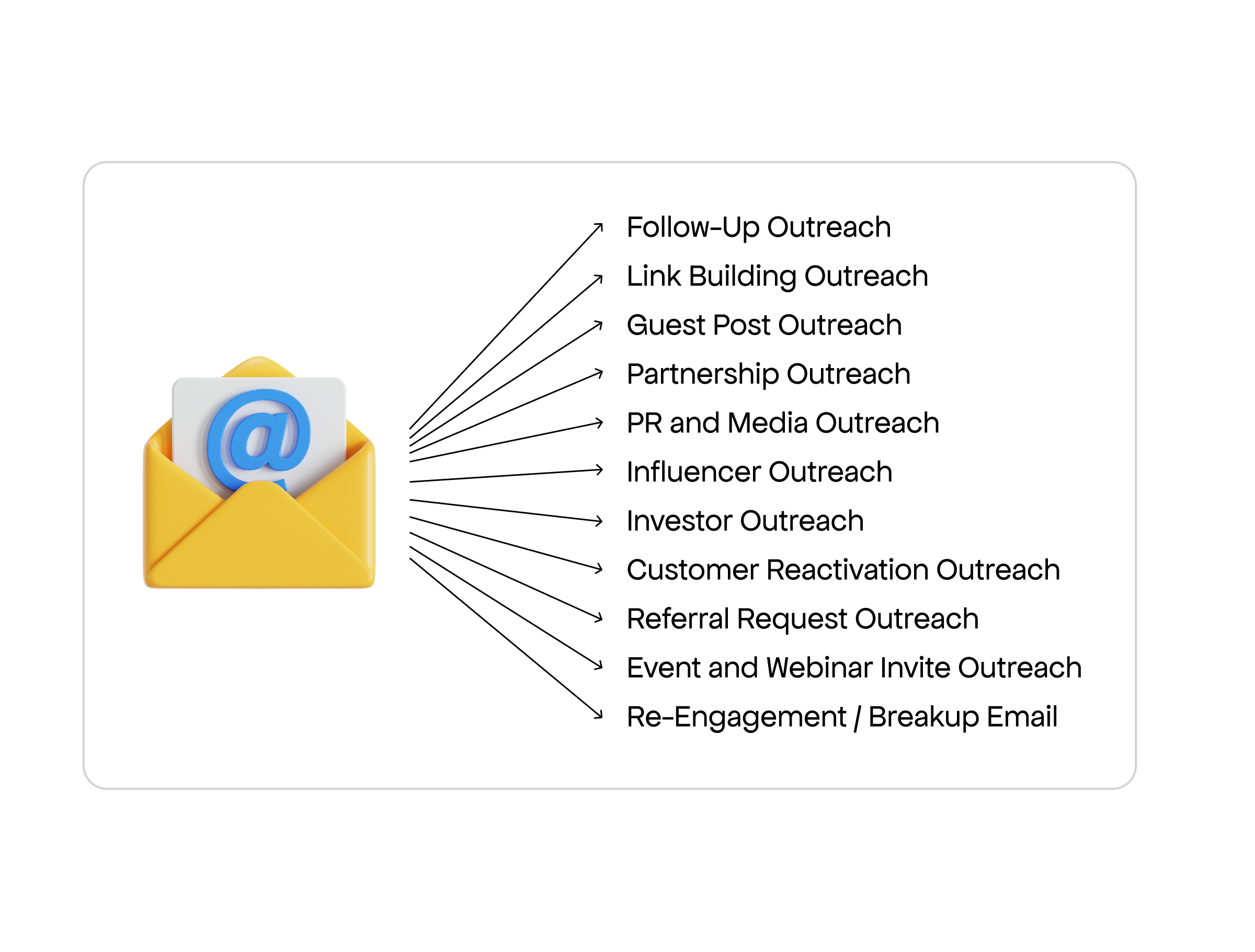
12 Types of Outreach Emails That Get Replies
1. Cold Sales Outreach
What it is: An unsolicited email to a prospect who matches your ideal customer profile. Your goal is to start a conversation that eventually leads to a sale.
When to use it: When you've identified a potential customer and want to introduce your product or service. This is the foundation of most B2B email outreach strategies.
What makes it work: Cold sales emails fail when they lead with features or go straight to a demo request. They work when they open with a specific pain point the prospect is likely experiencing, quickly explain how you solve it, and end with a low-friction ask — like a 15-minute call or a simple yes/no question.
Example:
Hi [Name], I noticed [Company] recently expanded into [market]. Most teams going through that transition struggle with [pain point]. We help companies like yours [outcome]. Worth a quick chat this week?
Pro tip: Keep it under 100 words. The shorter your cold outreach email, the higher your reply rate.
2. Follow-Up Outreach
What it is: A follow-up sent to someone who didn't respond to your first email.
When to use it: Always. Studies consistently show that the majority of replies come from follow-up emails, not the first touch. If you're not following up, you're leaving replies on the table.
What makes it work: Don't just "bump" your previous email. Each follow-up should add something new — a relevant insight, a case study, a different angle. Give them a reason to reply this time.
Example:
Hi [Name], following up on my last note. I came across this [stat/article] about [relevant topic] and thought it might be useful for your team. Still happy to share how we approach this — let me know if timing is better now.
Pro tip: Send 2–3 follow-ups spaced 3–5 days apart. After that, send a final "breakup email" that closes the loop gracefully.
3. Link Building Outreach
What it is: An email to a website owner, blogger, or editor asking them to link to your content from their site.
When to use it: When you have high-quality content that genuinely adds value to their audience and complements something they've already published.
What makes it work: Most link building outreach fails because it's generic. Personalize by referencing a specific article on their site. Explain exactly where your link fits and why their readers would benefit from it — not just why you want the backlink.
Example:
Hi [Name], I loved your recent piece on [topic] — especially the section on [specific point]. We just published a detailed guide on [related topic] that expands on that idea. I think it'd be a great addition for your readers. Would you be open to taking a look?
Pro tip: Mention a specific article you genuinely read. Vague compliments are easy to spot and kill credibility instantly.
4. Guest Post Outreach
What it is: Pitching a blog or publication to write an article for them as a guest contributor.
When to use it: When you want to build authority, earn backlinks, and get in front of a new audience. Guest posting is one of the most effective long-term email outreach strategies for content marketers and founders.
What makes it work: Pitch a specific article idea — not just "I'd love to write for you." Show you've actually read their blog. Propose a headline that fits their existing content style and audience level.
Example:
Hi [Name], I've been reading [Blog Name] for a while — your post on [topic] was particularly useful. I'd love to contribute a piece titled "[Specific Headline]" — it covers [angle] and I think it fits well with your [audience type] readers. Happy to share a full outline if you're interested.
Pro tip: Include 2–3 links to writing samples that are similar in format to their existing content.
5. Partnership Outreach
What it is: Reaching out to another business, creator, or team to propose a collaboration — a co-marketing campaign, integration, webinar, or joint content piece.
When to use it: When you've identified a company or individual whose audience overlaps with yours but you're not direct competitors.
What makes it work: Lead with mutual benefit. Be specific about what the partnership looks like and make the first step as easy as possible. Vague "let's collaborate" emails go nowhere.
Example:
Hi [Name], I run [Company], a [description] used by [audience]. I noticed [their company] serves a similar audience and thought there might be a great fit for a co-hosted webinar or joint newsletter feature. Would love to explore — open to a 20-min call next week?
Pro tip: The more specific your partnership idea, the easier it is for them to say yes or give a useful counterproposal.
6. PR and Media Outreach
What it is: Emailing journalists, editors, or podcast hosts to pitch a story, get coverage, or secure an interview.
When to use it: When you have genuinely newsworthy content — a product launch, a funding round, original research, or a strong opinion piece tied to a current trend.
What makes it work: Journalists receive dozens of pitches per day. Lead with the news angle, not your product. One tight paragraph. Make their job easy — give them the hook, the quote, and the relevance to their beat.
Example:
Hi [Name], I run [Company] and we just released data showing [surprising finding] among [audience]. Given your coverage of [beat], I thought this might be a fit. Happy to share the full report or jump on a quick call.
Pro tip: Never attach press releases in the first email. Paste the key points in the body and offer to send more.
7. Influencer Outreach
What it is: Reaching out to creators, thought leaders, or social media personalities to explore a collaboration, sponsored content, or product mention.
When to use it: When you want to reach a specific community through a trusted voice. Most effective with micro-influencers (10K–100K followers) who have high engagement.
What makes it work: Skip the copy-paste template. Reference specific content they've created. Explain why the partnership makes sense for their audience, not just what you'll pay them.
Example:
Hi [Name], your recent video on [topic] was exactly what I needed — the part about [specific moment] was genuinely insightful. I'm building [product] for [audience] and think your followers would find it useful. Would you be open to a trial and potential collab?
Pro tip: Lead with a genuine compliment about specific content before mentioning any commercial arrangement.
8. Investor Outreach
What it is: A cold email to a VC, angel investor, or fund manager to introduce your startup and explore funding.
When to use it: When you have traction to show — revenue, growth, users, or strong early signals. Cold investor outreach rarely works without proof points.
What makes it work: Lead with traction, not vision. One sentence on what you do. One sentence on your numbers. One sentence on why you're reaching out to them specifically — reference a portfolio company or a thesis they've written about.
Example:
Hi [Name], I'm building [Company] — [one-line description]. We're at $[X] MRR, growing [X]% month-over-month. Given your investment in [portfolio company], I thought there might be a fit. Would love to share more if you're open to it.
Pro tip: Keep it to 4–5 sentences max. Investors decide in 10 seconds whether to keep reading.
9. Customer Reactivation Outreach
What it is: Reaching out to churned, dormant, or lapsed customers to re-engage them.
When to use it: When a customer has gone quiet, downgraded, or cancelled. Especially powerful when you have something new to show — a feature update, a success story, or a relevant use case.
What makes it work: Don't just say "we miss you." Show them something has changed. Make it relevant to why they left or what they were trying to achieve.
Example:
Hi [Name], it's been a while — I noticed you haven't been using [feature] lately. We recently shipped [update] that specifically addresses [pain point you heard from them]. Would love to show you what's new if you're open to it.
Pro tip: Personalize data. Reference the specific feature or use case they engaged with before.
10. Referral Request Outreach
What it is: Asking a happy customer, partner, or colleague to refer you to someone in their network.
When to use it: Right after a positive interaction — a glowing review, a successful project, a strong NPS score. Timing is everything with referral requests.
What makes it work: Make it frictionless. Give them the exact type of person to refer to. Offer a clear incentive if appropriate. Don't make them think too hard.
Example:
Hi [Name], so glad the [project/feature] has been working well for you! If you know anyone else dealing with [problem], I'd love an intro — even just forwarding this email works. Happy to return the favor anytime.
Pro tip: Ask for a specific type of referral — "a sales leader at a 50-person SaaS company" — not just "anyone who might be interested."
11. Event and Webinar Invite Outreach
What it is: A personalized email inviting someone to attend a virtual or in-person event, workshop, or webinar.
When to use it: When you're running an event and want targeted attendees who would genuinely benefit — not just to inflate headcount.
What makes it work: Lead with what they'll learn or gain, not the event logistics. Make it feel like a personal invite, not a blast email.
Example:
Hi [Name], I'm hosting a live session next week on [topic] — specifically covering [problem relevant to them]. Given your work in [area], I thought it might be worth an hour of your time. Here's the link to grab a spot: [link]
Pro tip: Add a one-line reason why this person specifically should attend. It turns a generic invite into a personal one.
12. Re-Engagement / Breakup Email
What it is: A final email sent to a cold prospect, lapsed contact, or unresponsive lead to close the loop — and sometimes spark a reply through reverse psychology.
When to use it: After 3–4 unanswered touches. This is your last message in the sequence.
What makes it work: Be direct and low-pressure. Tell them you're removing them from your outreach. Give them one last easy out — a "not right now" response or a referral. This often gets replies from people who felt guilty ignoring you.
Example:
Hi [Name], I've reached out a few times but haven't heard back — no worries at all. I'll stop following up after this. If timing ever changes or you'd like to connect down the road, my inbox is always open.
Pro tip: Don't guilt-trip. Keep the tone warm and professional. You want to leave the door open, not slam it.If you want to improve your prospecting process, explore research methods for targeted email outreach to better identify and understand your audience.
How to Choose the Right Outreach Type
Ask yourself three questions before hitting send:
- What's my goal? (Lead gen, link building, press, fundraising, partnerships)
- What does the recipient care about? (Their audience, their workload, their goals)
- What's the lowest-friction ask I can make?
Match your email type to the intersection of your goal and their context. That's where replies happen.
Final Thoughts
Email outreach still works — but only when it's intentional. The senders who get replies aren't sending more emails. They're sending the right emails to the right people at the right time, using the format that fits the situation.
Use this guide as a reference every time you start a new outreach campaign. Pick the type that fits your goal, personalize it properly, and keep your ask small.
Want to run all 12 outreach types at scale — with AI-personalization built in? Try VitaMail →