


Cold email is not dead but it is getting measurably harder. Reply rates have fallen from 8.5% in 2019 to 5% in 2025, and inboxes have never been more crowded. That's why understanding cold email statistics in 2026 is no longer optional it's the foundation of any competitive outbound program.
We've sourced data from Instantly's 2026 Benchmark Report, Belkins' analysis of 16.5 million cold emails, Focus Digital, Cleverly, and other primary research to give you the most accurate cold email benchmarks available today.
Key Takeaways:
- The average cold email open rate in 2026 is 27.7% across B2B — but many platforms report 44%+ due to Apple MPP inflation; treat open rates as directional only.
- Recruiting leads all industries with ~52% open rates; SaaS sits at the bottom at ~25.7%.
- The average cold email reply rate is 3.43% (Instantly's 2026 Benchmark Report, billions of emails analyzed); top performers exceed 10%.
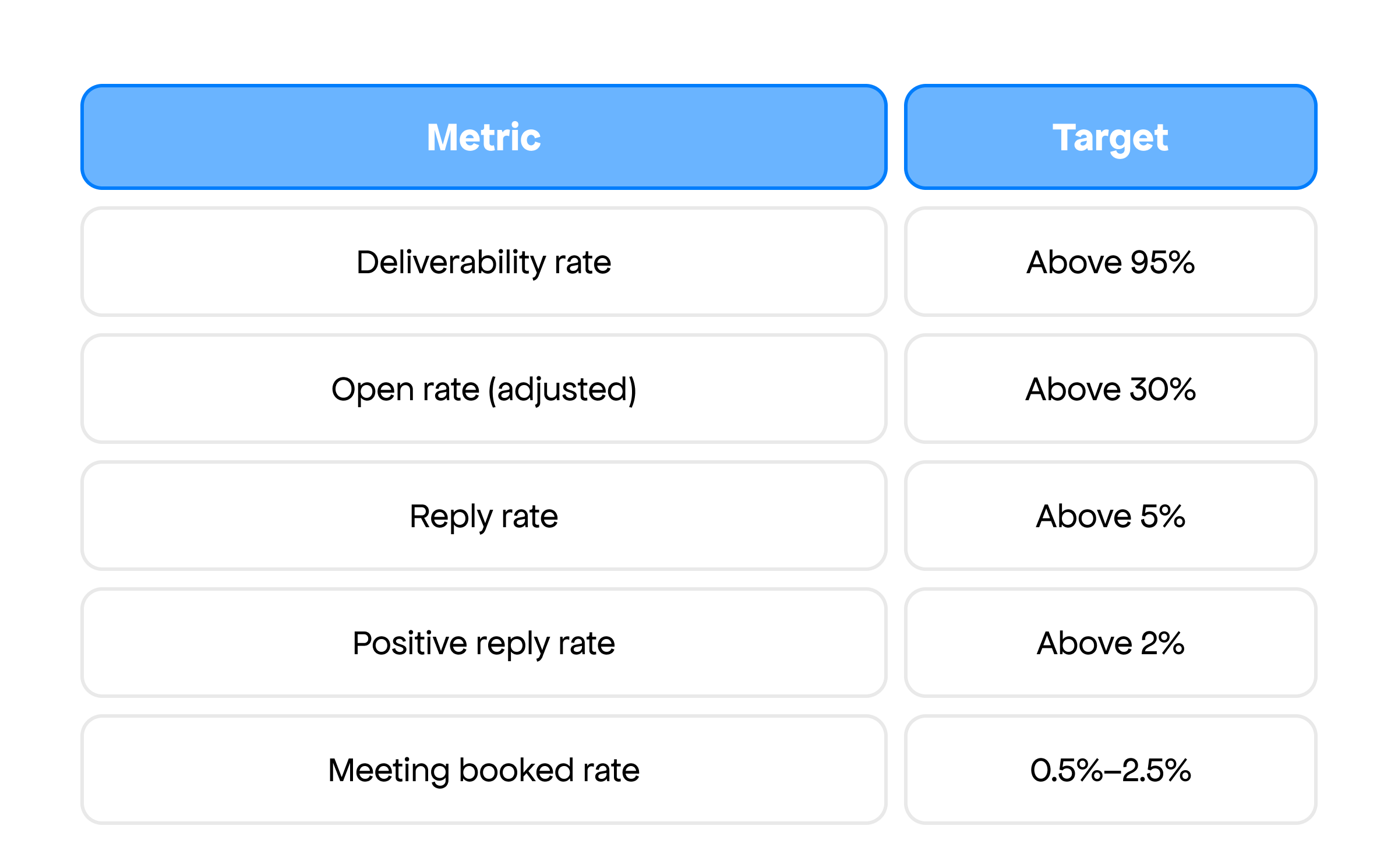
- A good email open rate for cold outreach is above 30%; a good reply rate is above 5%.
- Legal services leads reply rates at up to 10%; SaaS and software often sit under 2%.
- Sequences with 2–3 follow-ups can generate up to 42% of all replies — most reps never send a second email.
- Deep personalization drives a 32% higher response rate; personalized subject lines improve open rates by 50%.
Cold Email Open Rate Benchmarks: What Is a Good Email Open Rate in 2026?
Before diving into the numbers, one critical caveat: open rates are no longer a fully reliable metric. Apple's Mail Privacy Protection (MPP) automatically preloads email content for Apple Mail users, even if they never actually open the email. Since Apple Mail accounts for approximately 49% of all email clients, this has significantly skewed open rate data upward across the industry.
With that context, here's what the data shows in 2026:
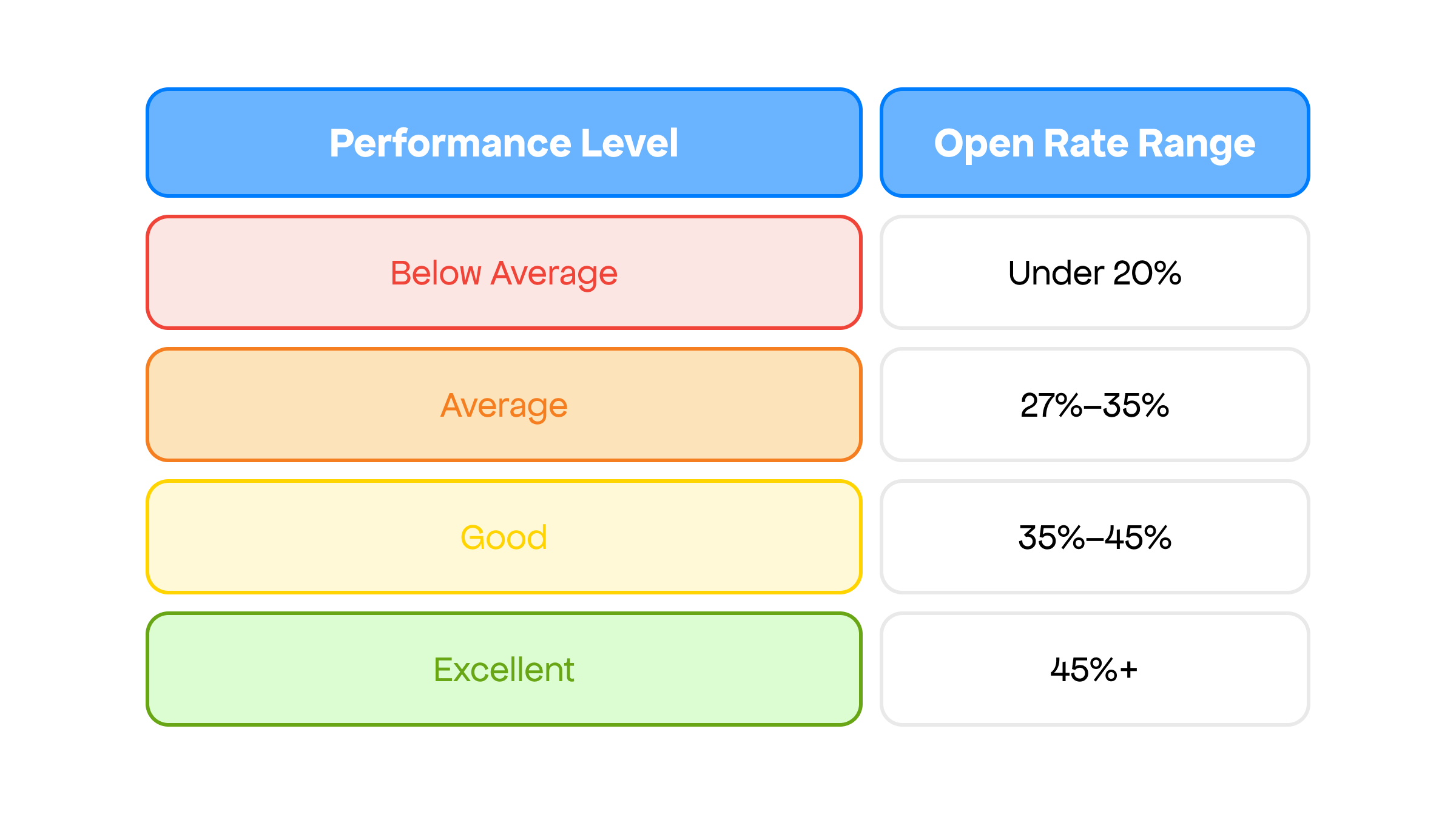
The average cold email open rate in 2026 is 27.7% based on non-MPP-inflated data, down from 36% in 2023. Some platforms report up to 44.2% when MPP data is included. A good email open rate for cold outreach is anything above 30% on an MPP-adjusted basis.
Key insight: A 40% open rate paired with a 1% reply rate means your subject lines work but your message isn't landing. Prioritize reply rate as your primary performance indicator, it's the metric spam filters can't distort.
Average Cold Email Open Rate by Industry
Here's a breakdown of cold email benchmarks by industry in 2025–2026:
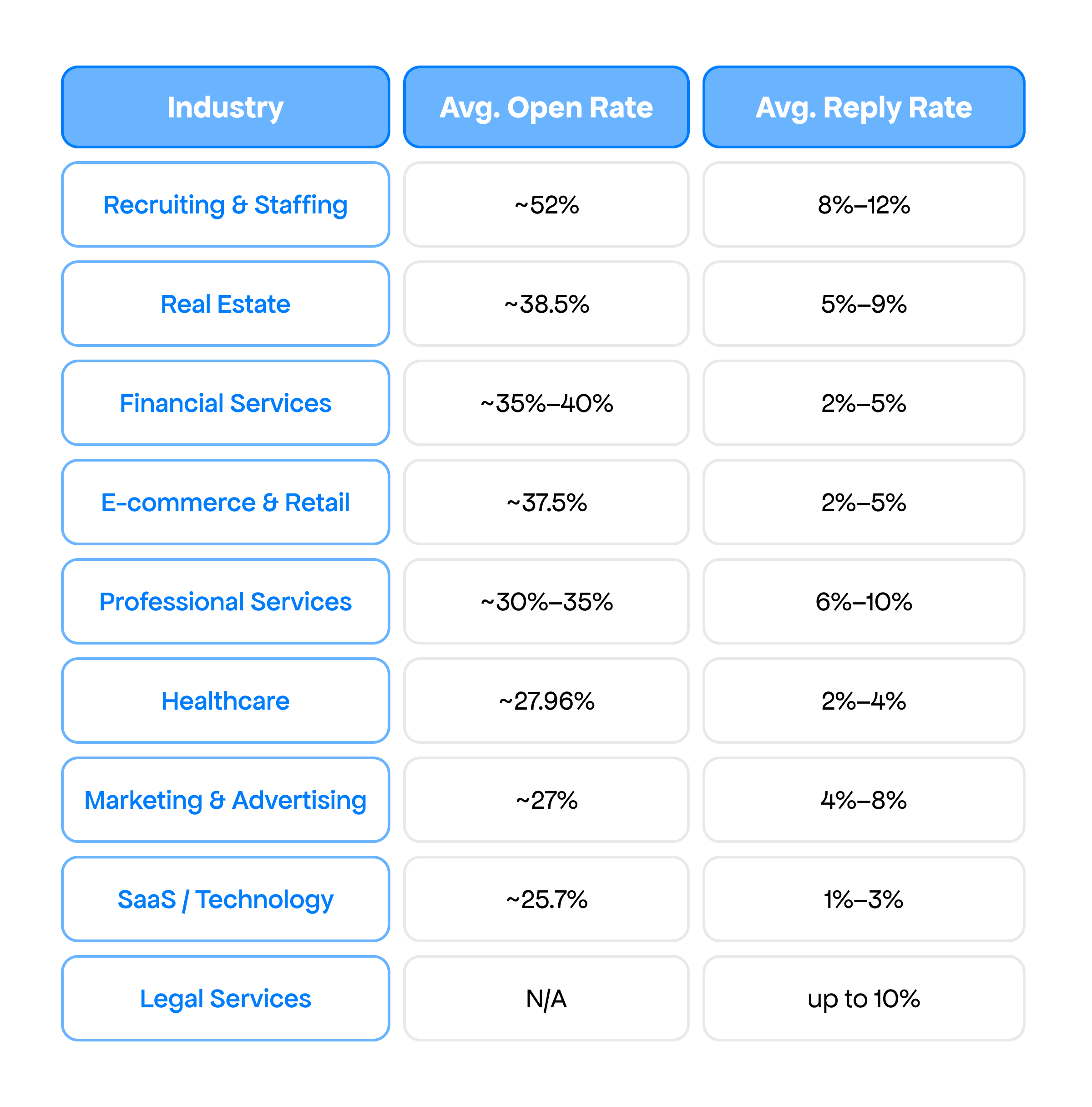
Key insight: Recruiting consistently tops the chart because job-related emails carry inherent personal relevance even cold recruiting emails promise a potential career opportunity. SaaS lags because tech buyers receive the highest volume of vendor outreach and have the most sophisticated spam filters.
Cold Email Reply Rate Statistics
What Is the Average Cold Email Reply Rate?
Reply rates are the most meaningful cold email statistic because they represent genuine two-way engagement and they're immune to MPP distortion. Here's what the data shows in 2025–2026:
- Platform-wide average: 3.43%
- Belkins study average (16.5M emails, 2024): 5.8% — down from 6.8% in 2023
- Good reply rate: Above 5% puts you ahead of most B2B senders
- Excellent reply rate: 10%+
- Top-quartile performers: 15%–25% through hook optimization and tight ICP targeting
- Historical decline: Average response rate dropped from 8.5% in 2019 → 7% in 2023 → ~5% in 2025
The trend is clear: the bar for "good" is rising every year. What was average in 2022 is now excellent.
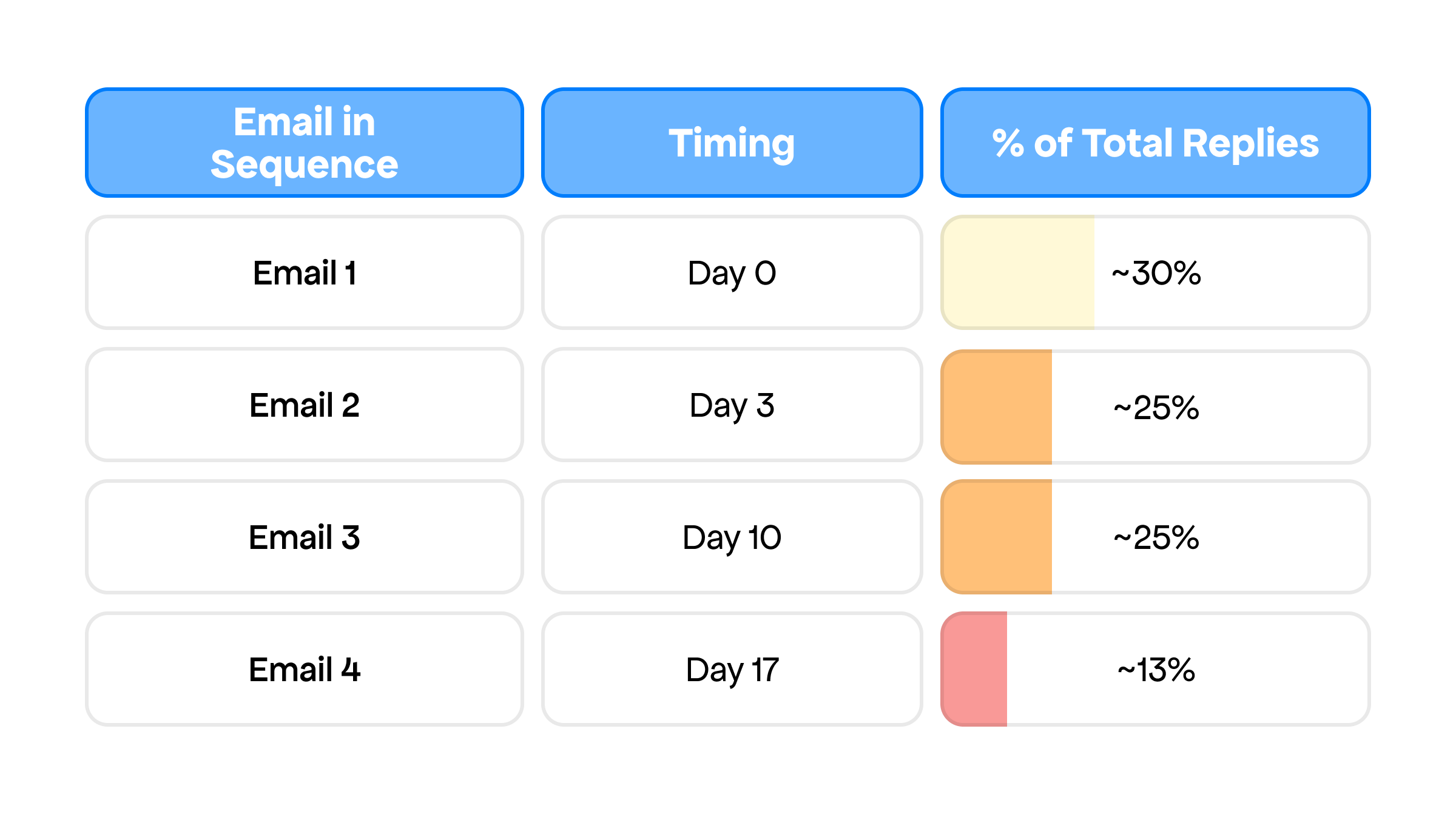
Reply Rate by Email Number in Sequence
The biggest performance lever? Follow-ups. Two to three follow-up emails can generate up to 42% of all replies — yet most reps never send a second email, leaving nearly half their pipeline untouched.
If you're not seeing replies after your first email, it’s worth exploring proven cold email follow-up frameworks that help you recover missed opportunities and boost engagement:
Click-Through and Conversion Benchmarks
While open and reply rates dominate discussion, CTR and downstream conversions are where pipeline actually gets created. CTR performance is evaluated as follows: if the CTR is below 1%, it is considered below average; between 1% and 3%, it is average; between 3% and 6%, it is good; and above 6%, it is considered excellent.
Cold emails with a single, clear CTA consistently outperform emails with multiple links. The best-performing cold emails in 2026 use one of three CTA types:
- Soft ask — "Would it make sense to connect briefly this week?"
- Calendar link — Direct link to a scheduling tool
- Single content link — One relevant case study, resource, or demo video
Meeting Booking Rate
For every 100 emails sent, you can realistically expect 1–2 booked meetings, depending on deal type, offer clarity, and follow-up quality. Meeting booked rates range from 0.5% to 2.5% across industries.
- Timeline-based hook sequences achieve a 2.34% meeting booking rate — 3.4x higher than problem-based hooks at 0.69%
- Industries with shorter sales cycles (SMB services, real estate, EdTech) consistently book meetings at higher rates than enterprise software or healthcare
What Impacts Cold Email Performance? The Key Variables
Here are the six variables with the greatest measurable impact on cold email results in 2025–2026, backed by real data:
1. Subject Line Quality
Personalized subject lines improve open rates by 50% compared to generic ones.
High-performing subject line patterns in 2026:
- 6–10 words outperform longer lines, achieving more than double the open rate of 21–25 word subject lines
- Question-format lines (2–4 words) create curiosity without over-explaining
- Including company name moves the needle most in SaaS; city-level context performs better in real estate; role-specific language wins in consulting
- The top-performing subject line format: "Hi {{first_name}}" — earns a 45.36% open rate Your subject line is the first impression, and small changes can make a big difference—take a look at these high-performing cold email subject lines to improve your open rates:
2. Personalization Depth
- Personalized emails increase response rates by ~32%
- Customized subject lines boost replies by up to 140%
- Hunter.io's analysis of 11 million emails confirms personalization depth drives 52% higher reply rates and that smaller, highly targeted campaigns outperform broad blasts by 2.76x.
- 78% of decision-makers are more likely to respond to emails that demonstrate a deep understanding of their business
Only ~5% of cold email senders personalize each email — yet those senders see 2–3x the replies.
3. Hook Type and Framing
This is the most underrated variable in 2025–2026 data:
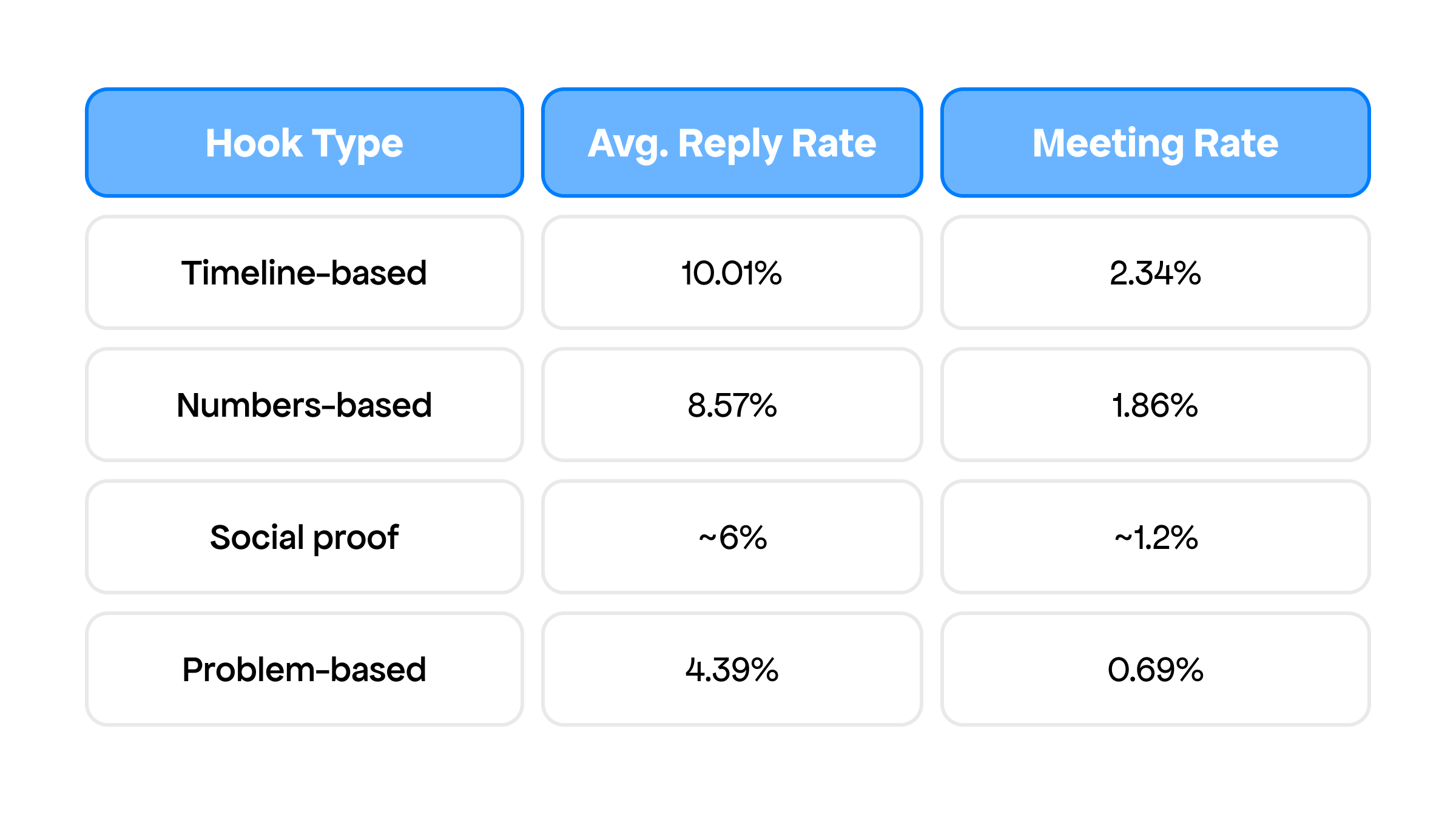
Timeline hooks (structured around compressed achievement windows and specific metric progression) outperform problem-statement hooks by 2.3x in reply rates and 3.4x in meetings booked.
4. Email Length
- Emails of 50–125 words achieve the highest reply rates in 2025–2026 data — approximately 50% higher than longer formats
- Short emails under 100 words have a 50% higher response engagement rate than longer ones
- Belkins' study found 6–8 sentence emails deliver the best results: 42.67% open rate, 6.9% reply rate
5. Sending Time and Day
- Best day to launch: Monday for new sequences; Wednesday for peak engagement on follow-ups
- Best send window: 9:30–11:30 AM in the recipient's local timezone
- Worst day: Friday, consistently the lowest performer
- Evening sends (8–11 PM) bring in the most replies in Belkins' 2024 dataset, peaking at 6.52%
6. Sender Reputation and Deliverability
- About 17% of cold outreach emails never reach any inbox — lost to bounces, spam filtering, or authentication failures
- SPF, DKIM, and DMARC are now mandatory: Google and Yahoo required all bulk senders to comply since February 2024; Microsoft followed in May 2025
- Keep spam complaint rate below 0.1% and bounce rate under 2%
- Emails optimized for deliverability see response rates increase by up to 30.5%
- Warming up a new email domain over 4–6 weeks reduces spam placement by up to 35%
- Sending from a domain with a minimum 3-month history improves inbox placement by 28%
How to Improve Your Cold Email Metrics in 2026
Armed with the data, here's a practical roadmap for lifting your cold email performance:
Step 1: Audit Your Current Benchmarks
Pull your last 90 days of cold email data. Compare against industry benchmarks above and measure:
- Open rate (adjust for MPP inflation if using Apple Mail)
- Reply rate (your most reliable metric)
- Bounce rate (target: under 2%)
- Spam complaint rate (target: under 0.1%)
Step 2: Fix Deliverability First
Before touching copy, ensure your technical foundation is solid. Proper email infrastructure can improve response rates by up to 30.5%. Confirm:
- SPF, DKIM, and DMARC are configured
- Your sending domain is at least 3 months old
- You've completed a 4–6 week warm-up on any new domains
- You're validating your list before every send [link: email validation tool]
Step 3: Switch Your Hook Type
If you're currently leading with a problem statement, test a timeline hook instead. The data shows a 2.3x reply rate lift across all industries and buyer profiles. Lead with a specific achievement window or metric outcome not a pain point.
Step 4: Shorten Your Emails
If your emails are over 150 words, cut them. Target 75–125 words. Every sentence should earn its place. Prospects scan they don't read.
Step 5: Personalize Above the First Name
First name and company name are now table stakes. Reference a recent funding round, a LinkedIn post, a new hire, or a company initiative. Campaigns using deep personalization see 2.76x higher reply rates than broad blasts.
Step 6: Build a 3–4 Touch Sequence
Single-send campaigns are leaving nearly half of potential replies behind. Build a sequence using the 3-7-7 cadence (Day 0, Day 3, Day 10, Day 17), which captures 93% of total replies by Day 10. Each touchpoint should offer a different angle or format.
Step 7: Track the Right Metrics
Conclusion
Cold email remains one of the highest-ROI outbound channels in B2B but the margin between average and excellent has never been wider. Understanding cold email statistics and applying real cold email benchmarks is what separates teams generating pipeline from those burning sender reputation.
The data is unambiguous: reply rates are declining industry-wide, but top-quartile performers are achieving 15%–25% by combining hook optimization, tight ICP targeting, and disciplined follow-up sequencing. The average cold email open rate of 27.7% is a baseline the ceiling is far higher for teams that do the work.