




Brands seeing the highest ROI from their email lists are those that have moved away from high-volume, generic sending. High-performing marketers prioritize relevance and data over sheer volume. Success in this channel requires a shift from "batch-and-blast" methods to a more sophisticated email campaign strategy.
Here are the specific email marketing tips and technical standards that separate market leaders from the rest.
How to Build a Data-Driven Email Campaign Strategy
The foundation of any successful campaign is how you use your data. Top marketers no longer rely on a static content calendar; they use automation to send the right message at the right time.
Use Behavioral Triggers for Better Results
Instead of manual newsletters, prioritize automated emails triggered by specific user actions:
- Browse Abandonment: Automatically emailing a user who viewed a specific product category.
- Milestone Emails: Celebrating a customer’s anniversary or a specific number of purchases.
- Post-Purchase Sequences: Sending "How-to" guides or care instructions immediately after a sale.
Collect and Use Zero-Party Data
With privacy laws tightening, top marketers now ask users for their preferences directly. Use preference centers to allow subscribers to choose their own frequency (e.g., "Weekly Digest" vs. "Daily Updates") and interest categories. This ensures your email campaign practices are built on what the user actually wants to see.
Optimizing Subject Lines and Preview Text for Higher Open Rates
Your subject line is the only factor determining if your content is ever seen. Top marketers use a specific, non-gimmicky approach to earn the click.
Write Descriptive, Benefit-Oriented Subject Lines
Avoid clickbait. Instead, clearly state the value inside the email.
- Standard: "Our New Collection is Out."
- Optimized: "5 New Sustainable Styles for Your Spring Wardrobe."
Utilize the Preview Text
The preview text (the snippet following the subject line) is prime real estate. Treat it as a "sub-headline." Use it to expand on the subject line or provide a secondary reason to click, such as a deadline or a specific detail about the offer.
Levering AI with VitaMail for Campaign Generation
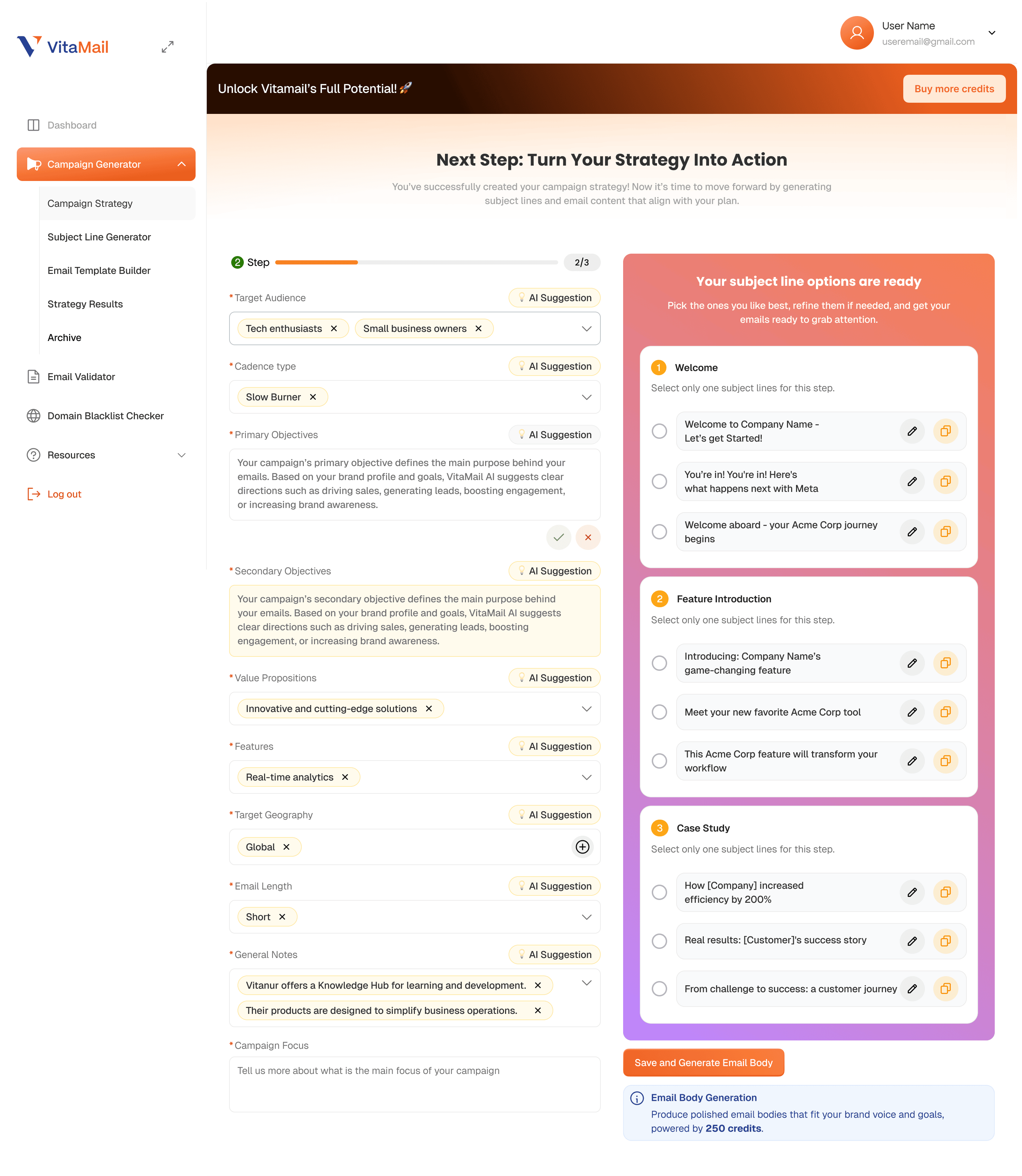
One of the biggest hurdles in email marketing is the time required to write compelling content. Top marketers are now using AI-powered assistants like VitaMail to bridge this gap while maintaining high quality.
AI-Powered Subject Line Generation
The subject line is the most critical factor for open rates. VitaMail’s AI Subject Line Generator analyzes your email body and target audience to suggest multiple high-performing headlines.
- Tailored Styles: You can select specific tones such as professional, friendly, or urgent to match your campaign goals.
- Industry Specific: The tool adapts its suggestions based on your specific industry, whether it's e-commerce, SaaS, or real estate.
- Optimization: It avoids common spam triggers like excessive punctuation or "clickbait" language to help ensure your messages land in the inbox.
Advanced Segmentation and Personalization Techniques
Basic personalization like using a first name is now a baseline expectation. To stand out, you must implement deep segmentation.
Implement Dynamic Content Blocks
Modern email tools allow you to change images and text within a single email based on the recipient's data. A customer in a cold climate should see winter coats, while a customer in a warm climate sees light jackets all within the same campaign.
Segment by Engagement Level
Divide your list based on how often people interact with your brand. Send your most frequent "VIPs" early access and exclusive content, while sending less frequent "Casual" subscribers a curated summary of your best content to prevent unsubscribes.
Email Design and Copywriting for Mobile Devices
Since over 60% of emails are opened on mobile devices, your design must be "mobile-first" to maintain high engagement.
Focus on Scannability
Most readers will scan your email in under five seconds. Use:
- Single-Column Layouts: These are easiest to read on narrow screens.
- Clear Call-to-Action (CTA) Buttons: Use large, touch-friendly buttons rather than text links.
- Concise Copy: Keep paragraphs under three lines and use bold text to highlight the main offer.
Balance HTML and Plain Text
Heavy image files can slow down load times and trigger spam filters. Top marketers often use a "hybrid" approach: clean, professional layouts that use plenty of white space and system fonts, ensuring the email loads instantly on any connection.
Technical Email Deliverability and List Hygiene
If your emails don't reach the inbox, your strategy is useless. Maintaining a high sender reputation is a non-negotiable email campaign best practice.
Related Topic: You can also explore these email content best practice guidelines to better understand how email messaging should be structured for clarity and consistency.
Implement a Sunset Policy for Inactive Users
Top marketers proactively remove subscribers who haven't opened an email in 6 or 12 months. Sending to unengaged users signals to providers like Gmail that your content is low-quality, which can land all your emails in the spam folder.
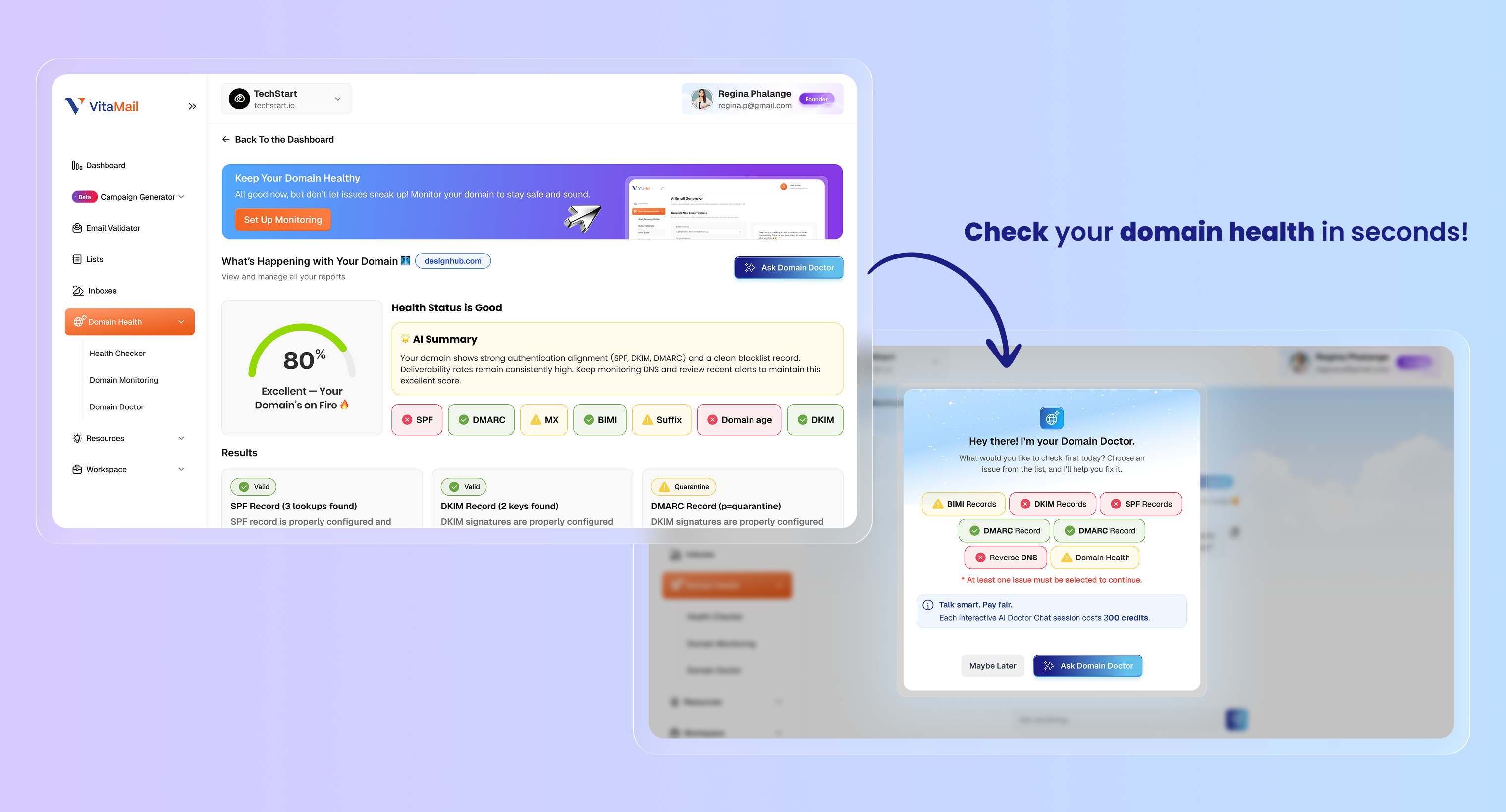
Set Up SPF, DKIM, and DMARC
These are technical authentication protocols that verify your identity as a sender. Having these correctly configured is the only way to prove to internet service providers (ISPs) that your emails are legitimate and safe for their users.
Testing, Analytics, and Final Conclusion
The final step in email marketing best practices is constant iteration. Don't just test subject lines; test your offer types, your layout styles, and your "From" names.
Summary: Successful email marketing is about respect for the subscriber's inbox. By focusing on behavior-based triggers, mobile-first design, and rigorous list hygiene, you can build a channel that delivers consistent, high-margin revenue.
Conclusion
Mastering email marketing best practices is not a one-time task; it is an ongoing process of refinement. The "Top Marketers" mentioned in this guide aren't necessarily smarter, they are simply more disciplined about using data over guesswork.
By moving from a "one-size-fits-all" approach to a strategy rooted in behavioral triggers, mobile-first design, and technical authentication, you will see a measurable lift in your open rates, click-through rates, and ultimately, your bottom line.