




According to Demand Sage, email marketing remains one of the most powerful ways to connect with your audience, delivering an average ROI of $36 for every $1 spent. But !! not every email delivers the same results sometimes open rates are low, click-throughs don’t happen, or the message simply doesn’t resonate. That’s where A/B testing in email marketing comes in.
A/B testing allows us to compare two different versions of an email to see which one performs better. It's applying email testing best practices to create smarter, more effective campaigns.

- Boost open rates: Test different subject lines to find out which ones grab attention.
- Increase clicks: Experiment with CTA buttons their color, text, and placement can significantly impact results.
- Understand your audience: Every test provides real insights into subscriber behavior, helping you refine future campaigns.
In short, A/B testing is a key optimization tool that drives better performance in your email marketing strategy.
Best Practices for A/B Testing in Email Marketing
A/B testing sounds simple on the surface: send two versions of an email and see which one works best. But if you don’t follow the right process, the results can be misleading and even push your campaigns in the wrong direction. That’s why marketers rely on email testing best practices to make sure their experiments lead to real improvements. Below are some in-depth tips to guide you.
1. Focus on One Variable at a Time
The golden rule of A/B testing is to keep it simple. If you test too many changes at once say a new subject line, a redesigned CTA button, and a different layout you won’t know which change actually drove the results. For example, if you’re testing subject lines, make sure the email body stays exactly the same. This way, when open rates shift, you’ll know it’s the subject line making the impact.
2. Define Success Before You Start
Every test should begin with a clear goal. Do you want to increase open rates, boost clicks, or drive more sales? For instance, if your primary challenge is getting subscribers to open your emails, you’ll want to focus your test on subject lines or sender names. But if your open rates are already solid, you might shift attention to the body copy or CTA to raise conversions. Having a defined success metric keeps your tests focused and prevents guesswork.
3. Ensure a Large Enough Sample Size
One of the biggest mistakes in A/B testing is drawing conclusions from too few people. Imagine sending Version A to 50 people and Version B to another 50. Even small random differences in behavior can skew the results. That’s why most email marketing platforms recommend a larger sample size, often a few hundred or more per variation, to ensure your insights are statistically reliable.
4. Give the Test Enough Time
Patience is critical in A/B testing. Ending a test after just a few hours may ignore important audience behavior. For example, some subscribers open emails first thing in the morning, while others check in the evening. If you cut your test short, you might miss half your audience’s behavior patterns. A good rule of thumb is to let tests run for at least 24–48 hours, depending on the size and activity of your list.
VitaMail is an affordable email verification tool that helps you keep your lists clean and boost deliverability.

5. Keep Generating Fresh Testing Ideas
Marketers often limit A/B testing to subject lines, but the opportunities go far beyond that. Think about testing:
- Sender names (brand name vs. personal name)
- CTA button design (color, shape, placement, or wording)
- Email length (short and punchy vs. detailed and informative)
- Timing (morning vs. afternoon sends, weekday vs. weekend)
- Format (HTML design vs. plain text emails)
For example, one e-commerce brand discovered that sending shorter, text-only emails from a “real person” rather than a corporate brand increased click-throughs by 20%. This happened because the format felt more authentic and personal. Exploring new email testing ideas like these can unlock insights that you might not expect.
6. Document and Learn from Every Test
A/B testing is not just about finding quick wins it’s about building long-term knowledge. Keep a record of what you tested, the results, and what you learned. Over time, this database becomes a goldmine of insights about your audience’s preferences, helping you design smarter campaigns without repeating mistakes.
Beyond content and design, inbox placement is also influenced by filtering systems, this guide on how Gmail’s spam filters work explains the signals that can affect where your test emails land.
Email Testing Best Practices
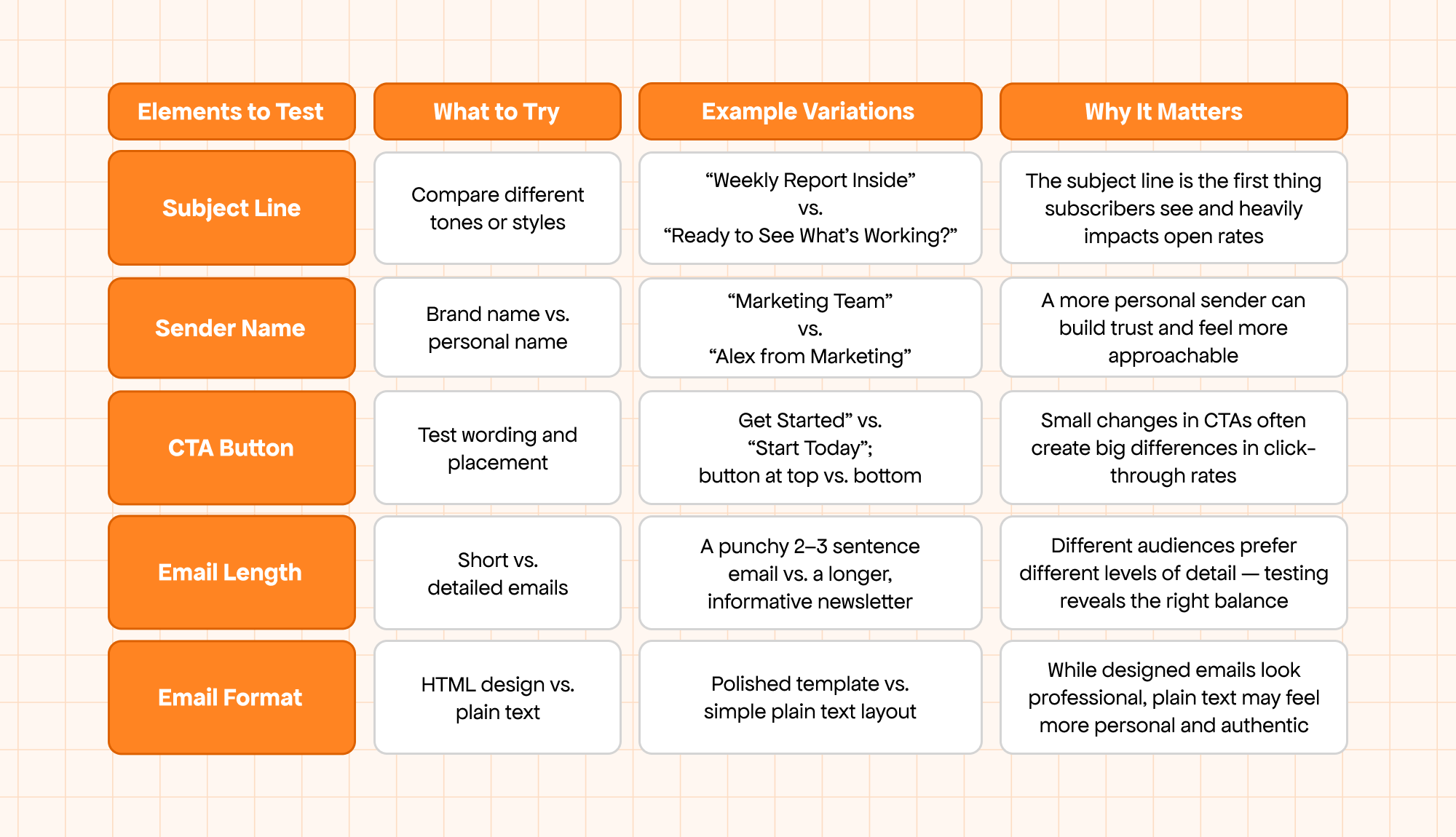
VitaMail includes a built-in AI Subject Line Generator that helps you craft high-performing subject lines in seconds. It analyzes tone, length, and engagement patterns to suggest variations that maximize open rates. Instead of guessing, you can instantly test multiple AI-generated options and pick the one most likely to grab your audience’s attention.

Read more: Free AI Subject Line Generator Prompts for Your Campaigns.
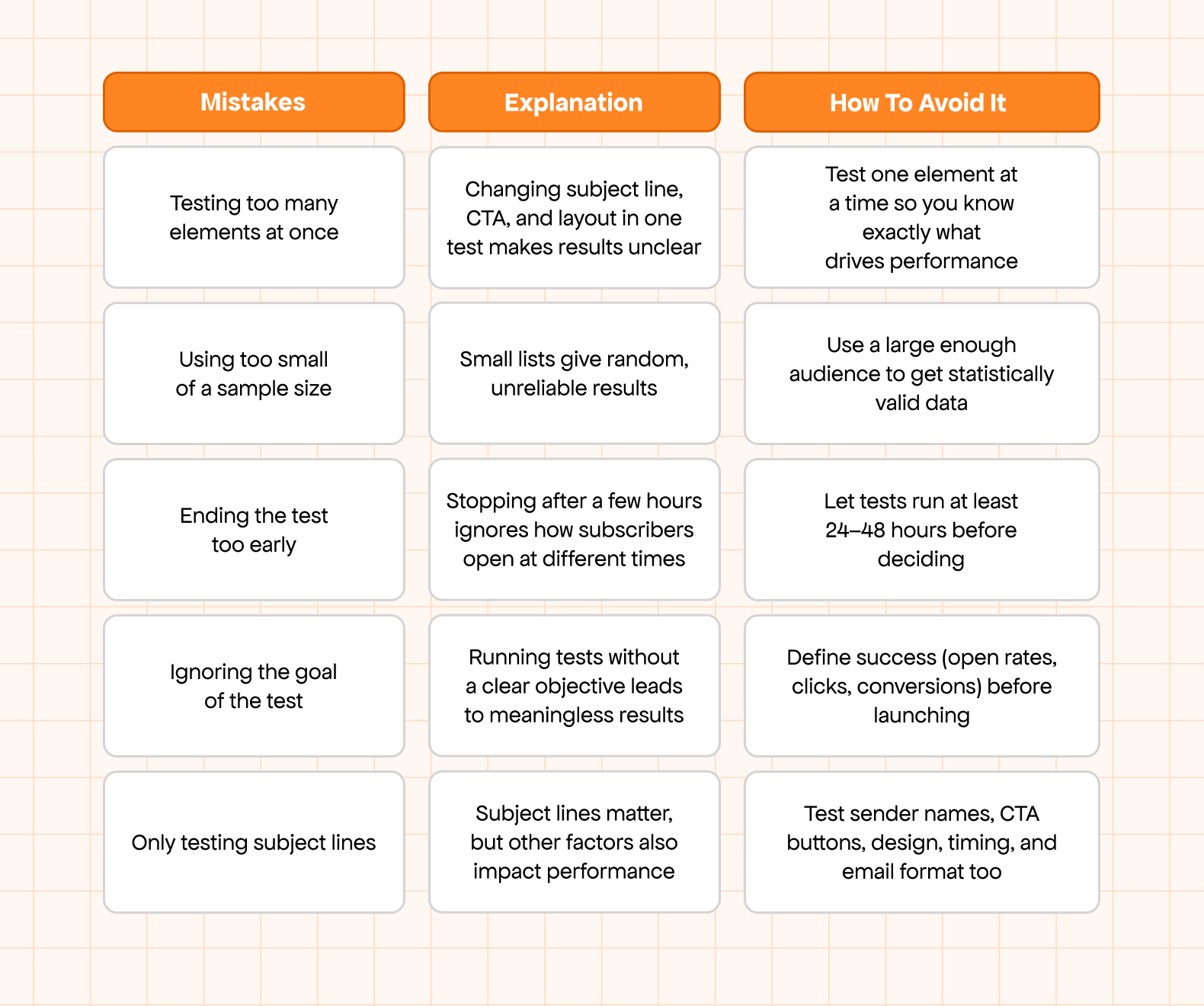
Common Mistakes in A/B Testing for Email Marketing
Many marketers run A/B tests with good intentions but fall into avoidable traps that lead to misleading results. Knowing the most common mistakes can save time, protect your data, and ensure your email marketing tests actually improve performance.
For a deeper look at email testing and optimization strategies, this Ultimate Guide to Testing and Optimization walks through how to turn good email performance into consistent results.
A/B testing in email marketing is not a one-time tactic but an ongoing practice. By following best practices, avoiding common mistakes, and measuring results with the right metrics, you turn every campaign into an opportunity to learn more about your audience and deliver emails that truly perform.