



If your emails are going to be spam, the problem may not be your content, it could be your domain reputation. Understanding how email domain reputation works is the first step to keeping your messages trusted and delivered.
What is domain reputation and why does it matter for email deliverability?
Your domain reputation is like your credit score in the world of email marketing. It’s the measure inbox providers such as Gmail, Outlook, and Yahoo use to decide whether your emails should be delivered to the inbox, filtered into spam, or blocked entirely. A strong email domain reputation means your campaigns reach subscribers successfully, while a poor one leads to high bounce rates, low engagement, and messages stuck in spam folders.
Domain reputation is built over time and depends on factors like sending volume, engagement rates, spam complaints, and authentication practices (SPF, DKIM, DMARC). If you send high-quality emails to verified subscribers, your reputation improves. But if you hit too many invalid addresses or trigger spam filters, your reputation suffers.
That’s why performing a domain reputation check is essential for every marketer. Running regular checks helps you spot problems early, such as blacklists, high spam complaints, or delivery failures.
Pro tip: VitaMail Free Domain Health Checker can quickly show you where you stand.

How does email domain reputation affect spam filters?
Domain reputation is a core part of overall email deliverability, which plays a key role in keeping emails out of spam and reaching the inbox.
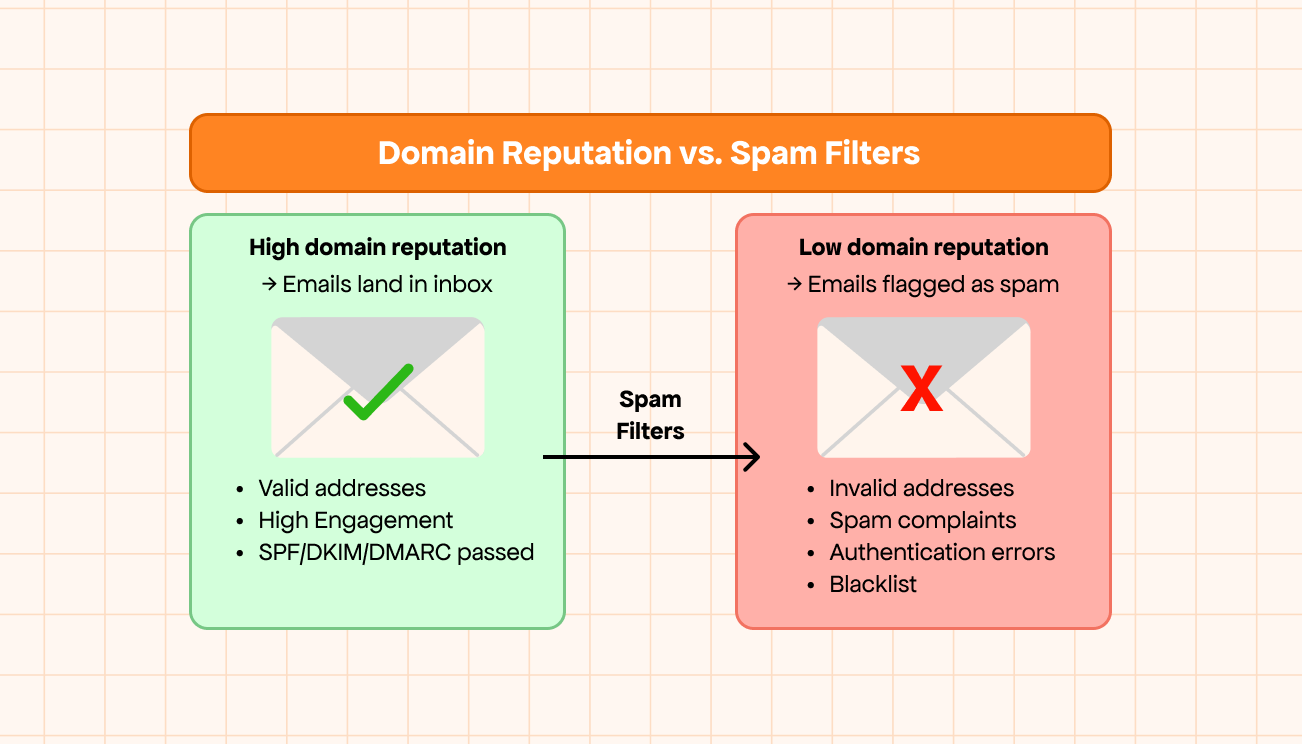
Spam filters are designed to protect users from unwanted or harmful messages, and your email domain reputation plays a critical role in how those filters treat your campaigns. When you send an email, inbox providers automatically run a domain reputation check to decide whether your message is trustworthy.
If your reputation is strong, the message is far more likely to land in the inbox. But if your domain has a history of sending to invalid addresses, generating high complaint rates, or failing authentication checks, spam filters will treat your campaigns as risky. The result? Higher chances of your emails being flagged as spam or rejected before delivery.
Many common email marketing mistakes don’t just hurt click rates, they can also damage domain reputation and increase the risk of emails landing in spam.
Here are some key ways email domain reputation influences spam filtering:
- Sending history – Consistent sending to valid, engaged subscribers improves reputation. Spam filters reward domains with positive history.
- User engagement – High open and click rates signal quality; low engagement tells filters your emails may not be wanted.
- Complaints and spam traps – If too many users mark your messages as spam, your domain’s trust score drops.
- Authentication failures – Missing SPF, DKIM, or DMARC records immediately raise red flags with filters.
- Blacklist status – If your domain is listed on industry blacklists, spam filters automatically downgrade your reputation.
Simple example: You send 5,000 promotional emails, but only half reach the inbox. Spam filter analysis shows your domain isn’t authenticated with DMARC, which damages your email domain reputation. Once fixed, your inbox placement improves and bouncebacks decrease.
What factors influence your domain reputation score?
Your email domain reputation is shaped by multiple factors that inbox providers evaluate before deciding whether your message belongs in the inbox or spam. Running a regular domain reputation check helps you understand which areas are strong and which may need improvement. Here are the main elements that directly influence your domain’s reputation score:
How do sending practices impact domain reputation?
The way you send emails plays a huge role in how providers judge your trustworthiness. Consistent sending schedules, verified domains, and avoiding sudden spikes in volume strengthen your email domain reputation. On the other hand, blasting thousands of emails without warming up your domain can quickly lower your score.
A regular email domain reputation checker can highlight unusual sending patterns that might put you at risk. If you’re unsure, you can use a free domain rating checker to compare your performance against industry standards.
Example: Sending 500–1,000 verified emails daily instead of jumping to 20,000 in one blast shows providers you’re a reliable sender.

How do engagement rates affect reputation?
Inbox providers reward domains that send content people want to read. High open rates, clicks, and replies tell filters your campaigns are relevant. Low engagement, high unsubscribe rates, or ignored messages signal that your emails may not be valuable lowering your email domain reputation.
Example: If 40% of your subscribers open and click your campaigns, your domain reputation score improves. If only 2% engage, filters start treating your emails as spammy.
Why do blacklists and complaints lower your score?
Few things hurt your email domain reputation faster than landing on a blacklist. Blacklists are databases of domains reported for sending spam or harmful content. Even if you didn’t intend to spam, complaints from recipients or hitting spam traps can damage your standing.
Example: If multiple users flag your newsletter as spam, your domain may appear on a blacklist leading to blocked emails until you fix the issue.
How can you check your domain reputation?
Checking your email domain reputation regularly is one of the most effective ways to protect deliverability and avoid the spam folder. A domain reputation check gives you a clear picture of how inbox providers view your sending domain whether it’s trusted, at risk, or already flagged.
Which free domain rating checker tools are available?
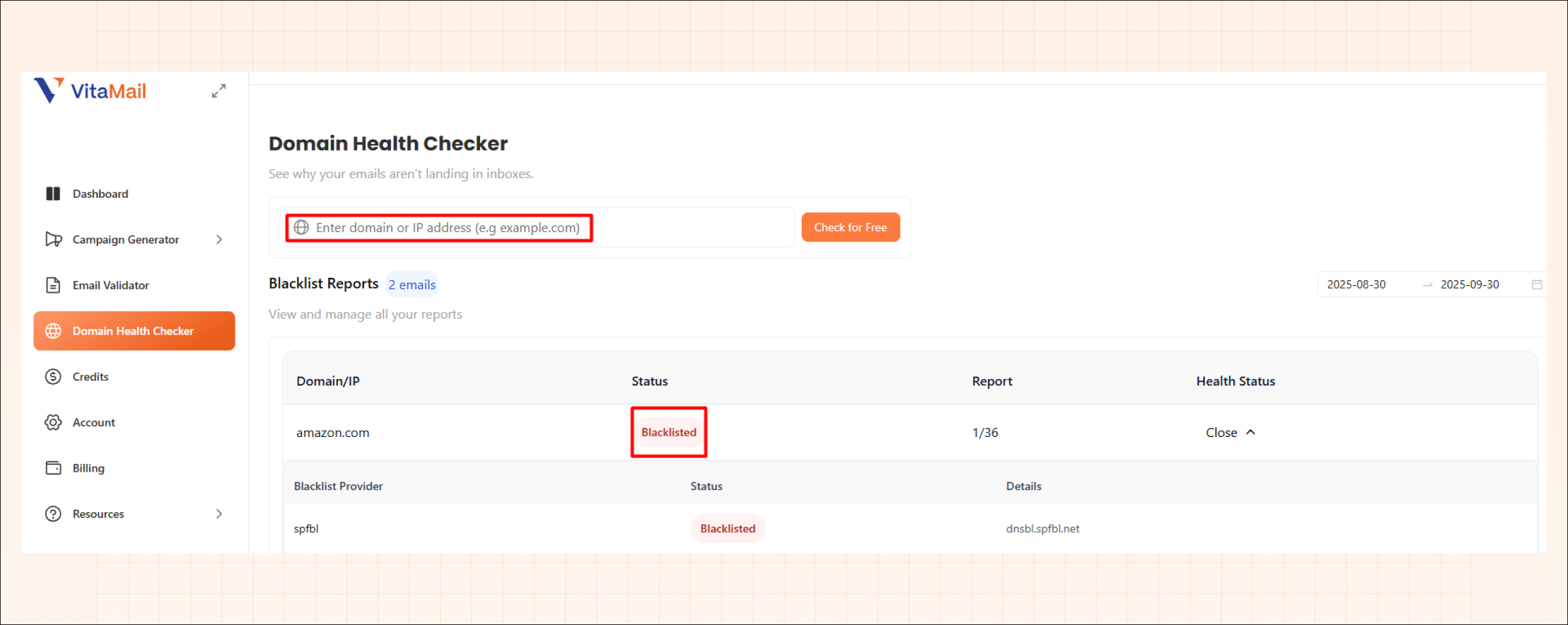
One recommended option is VitaMail, which offers a free email domain reputation checker. With VitaMail, you can:
- Instantly run a domain reputation check to see if your domain is trusted by major providers.
- Review blacklist status and authentication issues.
- Track engagement-related factors that may impact your email domain reputation.Get clear steps on how to improve weak areas before your emails are blocked or sent to spam.
Example: Before sending a 10,000-subscriber newsletter, you run a check with VitaMail. The tool shows that your domain has a strong score, no blacklist issues, and clean authentication giving you confidence your emails will land in inboxes.
What is a good domain reputation benchmark in 2025?
A good domain reputation benchmark in 2025 means keeping your domain in the high reputation range, where inbox providers trust your emails. Practically, this translates to:
- Bounce rate: below 2%
- Spam complaint rate: under 0.1%
- Consistent engagement: open rates above 15–20% depending on industry
- Authentication: SPF, DKIM, and DMARC fully configured
Conclusion
A strong email domain reputation is the key to staying out of spam in 2025. Regular domain reputation checks, clean lists, and proper authentication keep your score high and your emails landing in inboxes.