



B2B email deliverability is the silent foundation of your revenue pipeline. If your messages fail to reach the primary inbox and instead land in the junk folder, your lead nurturing sequences, sales outreach, and essential client communications cease to function. This guide provides the definitive, actionable fixes needed to establish a bulletproof sending reputation, secure compliance with new 2024/2025 ISP policies, and ensure your B2B emails consistently reach the right decision-makers.
1. Technical Infrastructure: The Mandatory Fixes
The first and most critical step in fixing poor deliverability is establishing irrefutable technical identity. Internet Service Providers (ISPs) rely on three Domain Name System (DNS) records to verify you are who you say you are.
Implementing the Authentication Trifecta: SPF, DKIM, and DMARC
You must configure these three records on your sending domain. Without them, your emails are effectively unverified and highly susceptible to spam filters.
- SPF (Sender Policy Framework): This record specifies which mail servers (IP addresses) are authorized to send email on behalf of your domain. A missing or improperly configured SPF record allows spammers to easily spoof your address.
- DKIM (DomainKeys Identified Mail): This adds a digital signature to your outgoing emails. The recipient's server uses this signature to verify that the email content has not been tampered with during transit, ensuring integrity.
- DMARC (Domain-based Message Authentication, Reporting, and Conformance): This is the policy layer. DMARC tells ISPs what to do if an email fails the SPF or DKIM checks (e.g., deliver it, quarantine it, or reject it).
The Subdomain Strategy for B2B Scale
B2B outreach often involves higher-volume, cold email campaigns. Sending these from your primary domain (yourcompany.com) is a massive risk. A single error or spam complaint can damage your entire corporate email infrastructure.
The Fix: Use a subdomain (e.g., outreach.yourcompany.com or vitamail.vitanur.com).
A subdomain allows you to build a separate, isolated sender reputation. If your cold outreach gets flagged, your primary domain's reputation for marketing, transactional, and internal emails remains protected.
2. List Health & Data Quality (Stop Sending to Spikes)
A clean email list is the most effective defense against reputation damage. ISPs view high bounce rates and spam complaints as a clear signal of poor list hygiene and spammy behavior.
Removing the Silent Killers: Hard Bounces and Spam Traps
- Hard Bounces: These occur when an email address is permanently invalid, nonexistent, or blocked. Remove hard bounces immediately as they instantly degrade your sender score.
- Spam Traps: These are old, abandoned, or intentionally planted email addresses used by ISPs to identify senders with poor data practices (e.g., scraping or purchasing lists). Hitting even one high-value spam trap can permanently damage your domain reputation.
Data Point: Your maximum acceptable Hard Bounce Rate is <2%. If you exceed this, immediately pause sending and verify your list.
The Double Opt-In (DOI) Mandate for Trust
While single opt-in is faster for acquisition, Double Opt-In (requiring the user to click a verification link in an initial email) is the B2B best practice for deliverability.
DOI guarantees that the address is valid and that the recipient genuinely wants to receive your content. This proactive measure drastically reduces the risk of spam complaints, which is the fastest way to kill your sender reputation.
Segmentation by Intent vs. Job Title
Generic B2B sequences lead to low engagement, and low engagement signals negative deliverability to ISPs. Segmentation is the key to relevance.
Instead of just segmenting by static fields like "Marketing Manager," leverage real-time intent data (e.g., prospect is viewing pricing pages, attending a specific webinar, or reading a relevant article). This level of precision ensures your email content feels timely and hyper-relevant, boosting opens, clicks, and replies—all positive signals.
This applies whether you're a SaaS platform nurturing trial users or an e-commerce brand recovering abandoned carts. The more precisely you segment, the stronger your engagement signals become.
3. Sender Reputation and Warm-up Protocols
Sender reputation is your credit score with mailbox providers. It dictates whether your email lands in the inbox or the spam folder. Building and maintaining it requires patience and consistency.
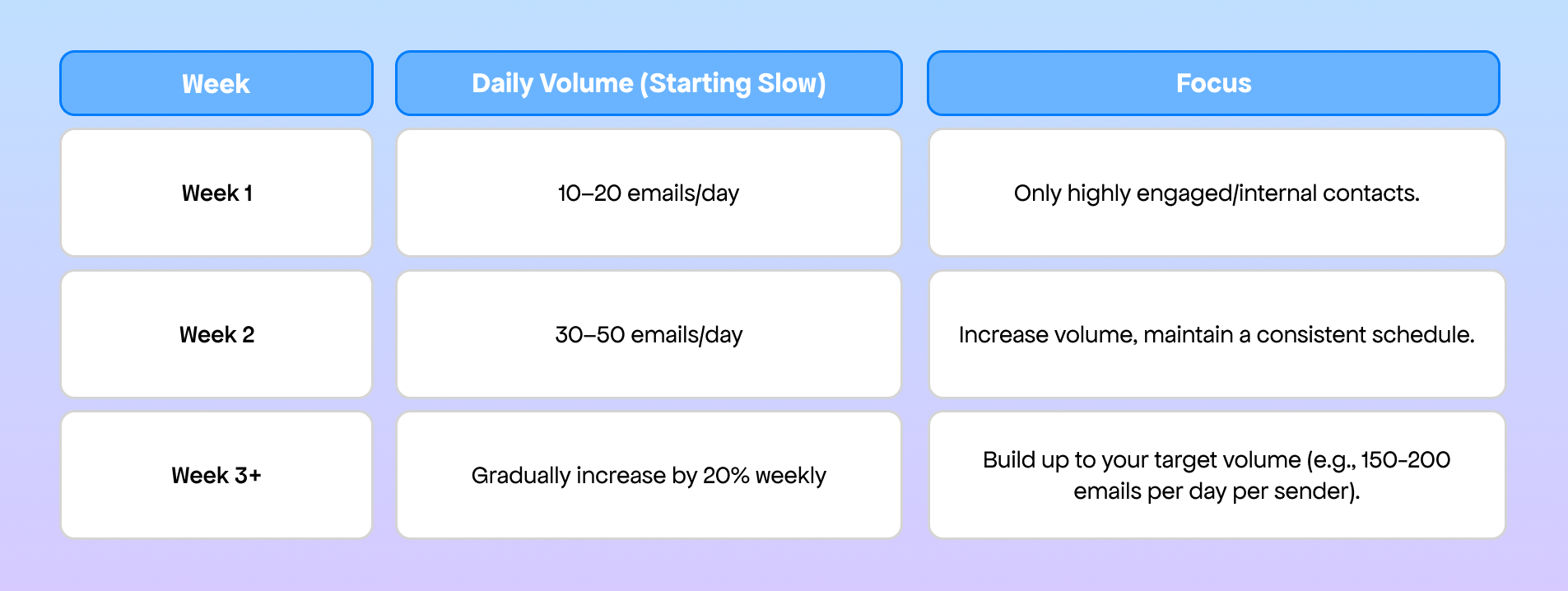
Domain and IP Warm-up: The Daily Volume Ramping Guide
If you are using a new domain or a new dedicated IP address, you must "warm it up" by sending small, consistent volumes of highly engaging emails. Spiking your send volume is the number one trigger for spam filters.
How to Monitor and Interpret Google Postmaster Tools Data
Google Postmaster Tools is the essential, free dashboard for monitoring your reputation with Gmail (one of the largest B2B mailbox providers). It provides key metrics like:
- IP Reputation: How much spam has been sent from your IP.
- Domain Reputation: How often users mark emails from your domain as spam.
- Spam Rate: The percentage of mail sent that is marked as spam.
Regularly review this dashboard (weekly) to spot reputation drops before they become catastrophic deliverability failures.
Rapid Blocklist Remediation Steps
Blocklists (or blacklists) are databases maintained by organizations like Spamhaus or SpamCop that track IPs and domains involved in sending spam.
- Diagnosis: Use the Vitamail Blacklist Checker to immediately and accurately determine if your IP or domain is listed on major blocklists. This tool provides instant visibility, which is the crucial first step to recovery.
- Fix the Root Cause: Before submitting a removal request, you must identify why you were listed (e.g., poor list hygiene, missing DMARC, too many hard bounces) and fix it.
- Request Removal: Follow the specific instructions on the blocklist provider's website. They will only remove you if they believe you have addressed the underlying issue.
4. Content & Engagement Fixes for Modern Filters
Even with perfect infrastructure, poor content will lead to low engagement, and low engagement is treated as a negative signal by modern, behavior-based spam filters.
Moving Beyond Basic Personalization (Leveraging Intent Data)
Basic personalization ({{firstname}}) is no longer enough. B2B engagement is boosted by showing you understand the recipient's business context.
- High-Value Personalization: Reference a specific company pain point, mention a recent trigger event (a new funding round, a recent job change), or cite a relevant industry metric. This signals true value and relevance to the prospect.
The Reply-Rate Metric: Designing Emails for Two-Way Engagement
Opens and clicks are good, but a reply is the gold standard for a positive sender reputation. A reply is the strongest signal to an ISP that your email is a genuine human-to-human conversation, not a bulk blast.
- Design Fix: End your emails with open-ended questions (e.g., "Does this challenge resonate with your team's current goals?") or simple, clear Calls-to-Action (CTAs) that encourage a quick text response, rather than just a click on a link.
Avoiding Spam Triggers and Formatting Risks
- Content Triggers: Avoid overly promotional, aggressive, or deceptive language. This includes words like "FREE," "URGENT," "GUARANTEE," or excessive use of exclamation points (!!!).
- Formatting Triggers: Use a balanced image-to-text ratio (aim for a minimum 60% text to 40% image space). Avoid complex HTML templates, large image files, or excessive link volumes. Keep the message concise and easy to read.
5. Advanced Troubleshooting & Compliance (Exploit Gaps)
To truly outperform competitors, you must adhere to the latest technical mandates and solve for the real-world complexity of B2B operations.
Deep Dive into Google/Microsoft Bulk Sender Rules
The new compliance mandates for bulk senders (sending 5,000+ emails per day) are non-negotiable and demand two specific technical fixes:
- The <0.1% Complaint Threshold: You must actively monitor your Complaint Rate (emails reported as spam) and ensure it remains below 0.1% across your entire sending volume. Above this rate, your domain faces severe filtering. This requires aggressive removal of unengaged and complaining users.
- One-Click Unsubscribe Mandate: Your emails must support a one-click unsubscribe mechanism directly in the email header. This is a technical standard separate from the link you put in your footer. Making it easy to unsubscribe reduces the likelihood a frustrated user will hit the "Spam" button instead.
Case Example: A B2B SaaS company experienced a +30% increase in inbox placement within 60 days after implementing a DMARC p=quarantine policy and removing all addresses that had not engaged in the previous 9 months. The fix was technical enforcement combined with aggressive list hygiene.
Fixing Fragmented Tech Stacks
In B2B, sales often uses an outreach tool (e.g., HubSpot Sales, Salesforce), and marketing uses an ESP (e.g., Mailchimp, SendGrid). If these systems are sending from the same domain but lack coordinated authentication, your reputation is at risk.
The Fix: Use a DMARC service that provides aggregate reports. This allows you to see all the different sending sources using your domain, identify the ones that are unauthenticated, and ensure your SPF/DKIM records include every single authorized vendor. You must audit and update your DNS records every time you add or remove an email service.
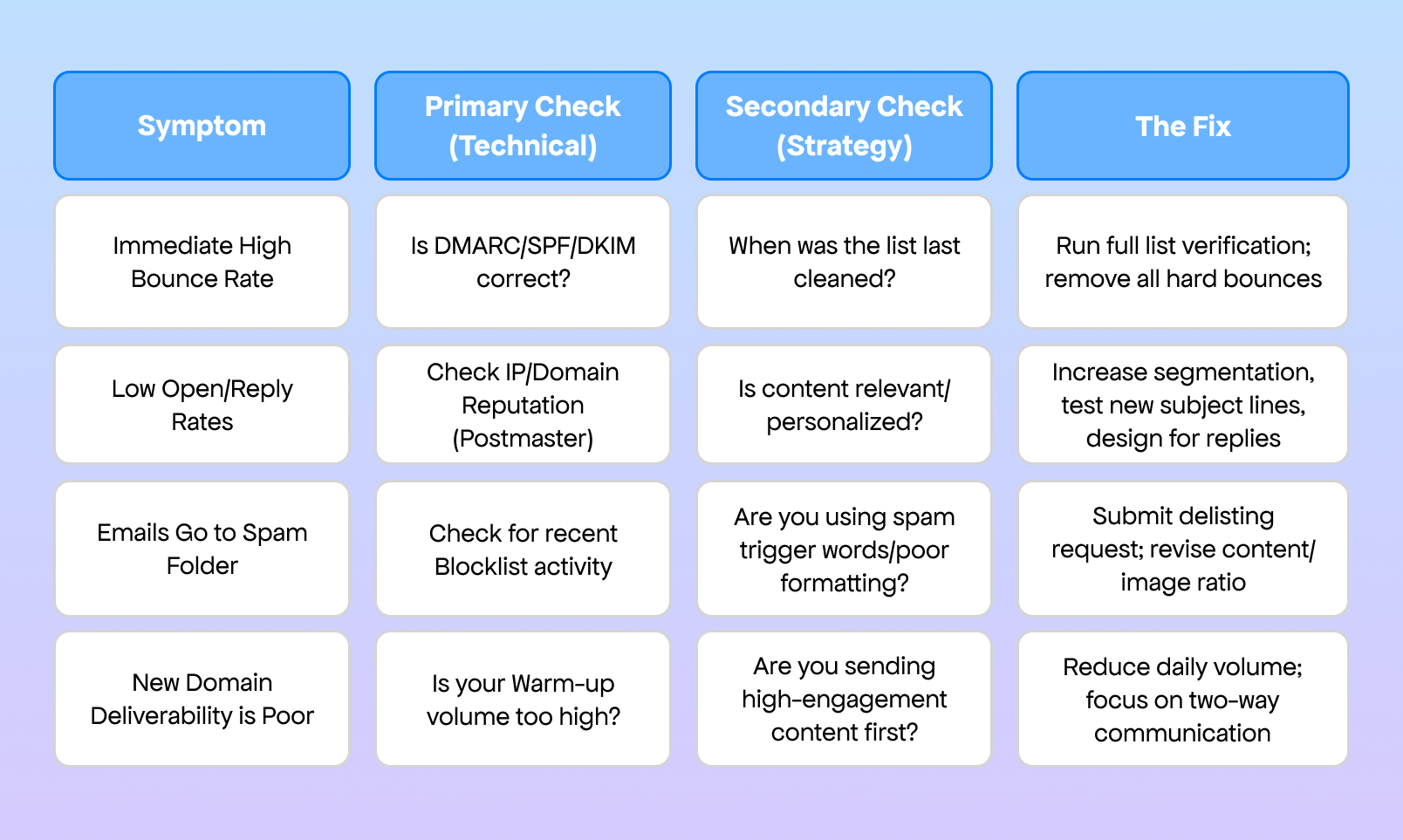
Troubleshooting Flowchart: A Step-by-Step Diagnostic Guide
Use this flow to diagnose common deliverability issues based on symptoms.
Conclusion
Fixing B2B email deliverability is a commitment to continuous optimization, not a one-time project. By focusing first on the Technical Infrastructure (SPF, DKIM, DMARC), maintaining a Bounce Rate <2% through rigorous List Hygiene, and adhering to the strict <0.1% Complaint Rate threshold of 2024 compliance, you will build the sender trust necessary to drive ROI.
Stop guessing where your emails are landing. Start monitoring, authenticating, and sending valuable content today.