




Businesses using lead magnets see up to 50% higher conversion rates than those relying on a plain "subscribe to our newsletter" button. Yet most websites still ask visitors to hand over their email address for nothing in return - and wonder why their list never grows.
A lead magnet fixes that. It turns passive website visitors into active subscribers by giving them something genuinely useful in exchange for their contact details. But not all lead magnets are created equal. The wrong one attracts the wrong people. The right one builds a list of engaged, high-intent subscribers who actually open your emails and buy.
In this guide, you'll find 25 proven lead magnet examples organized by business type, a step-by-step guide to creating your own, and - crucially - what to do with those email addresses after you collect them.
What Is a Lead Magnet?
A lead magnet is a free asset - a discount code, downloadable guide, quiz, template, webinar, or tool - that a business offers to website visitors in exchange for their contact information, typically an email address.
The concept is simple: visitors want something valuable, and you need a way to stay in touch with potential customers. A lead magnet is the bridge between the two. Instead of hoping visitors come back on their own, you give them a compelling reason to share their email - and a reason to remember you.
Here's how the exchange works in practice:
- A visitor lands on your website or a dedicated landing page
- They see an offer: "Download our free guide / Get 20% off / Take the quiz"
- They enter their email to unlock access
- You deliver the resource immediately and begin a nurture sequence
- Over time, you build a relationship that leads to a sale
The lead magnet sits at the very top of your email marketing funnel. Everything downstream - your welcome sequence, product announcements, promotional campaigns - depends on the quality of subscribers you bring in at this stage.
That's why choosing the right lead magnet matters far more than most businesses realize.
Why Lead Magnets Are Critical for Email List Growth
Email marketing consistently delivers the highest ROI of any digital marketing channel - $42 back for every $1 spent, according to the DMA. But that return only materializes when your list is full of real, engaged subscribers.
Lead magnets are the most effective mechanism for growing that list. They work because they reframe the ask: instead of "subscribe to hear from us," you're saying "here's something valuable - want it?"
But here's what most guides on lead magnets miss entirely.
The magnet you choose doesn't just determine how many people sign up. It determines who signs up.
A contest that gives away an iPad will attract thousands of entries from people who want an iPad, not your product. A checklist titled "10 Things to Do Before Sending Your First Email Campaign" will attract people who are actively building email campaigns - exactly the kind of subscriber who might buy your email tool.
List quality is set at the moment of opt-in. A poorly targeted lead magnet = low engagement = poor deliverability = emails that land in spam. A well-targeted lead magnet = engaged subscribers = strong sender reputation = emails that reach the inbox every time.
Once you start collecting emails with your lead magnet, keeping that list clean is what separates good campaigns from great ones. More on that in a moment.
What Makes a Great Lead Magnet?
Most lead magnet advice gives you a generic checklist. Here's a more useful way to think about it - each quality explained in terms of why it actually converts:
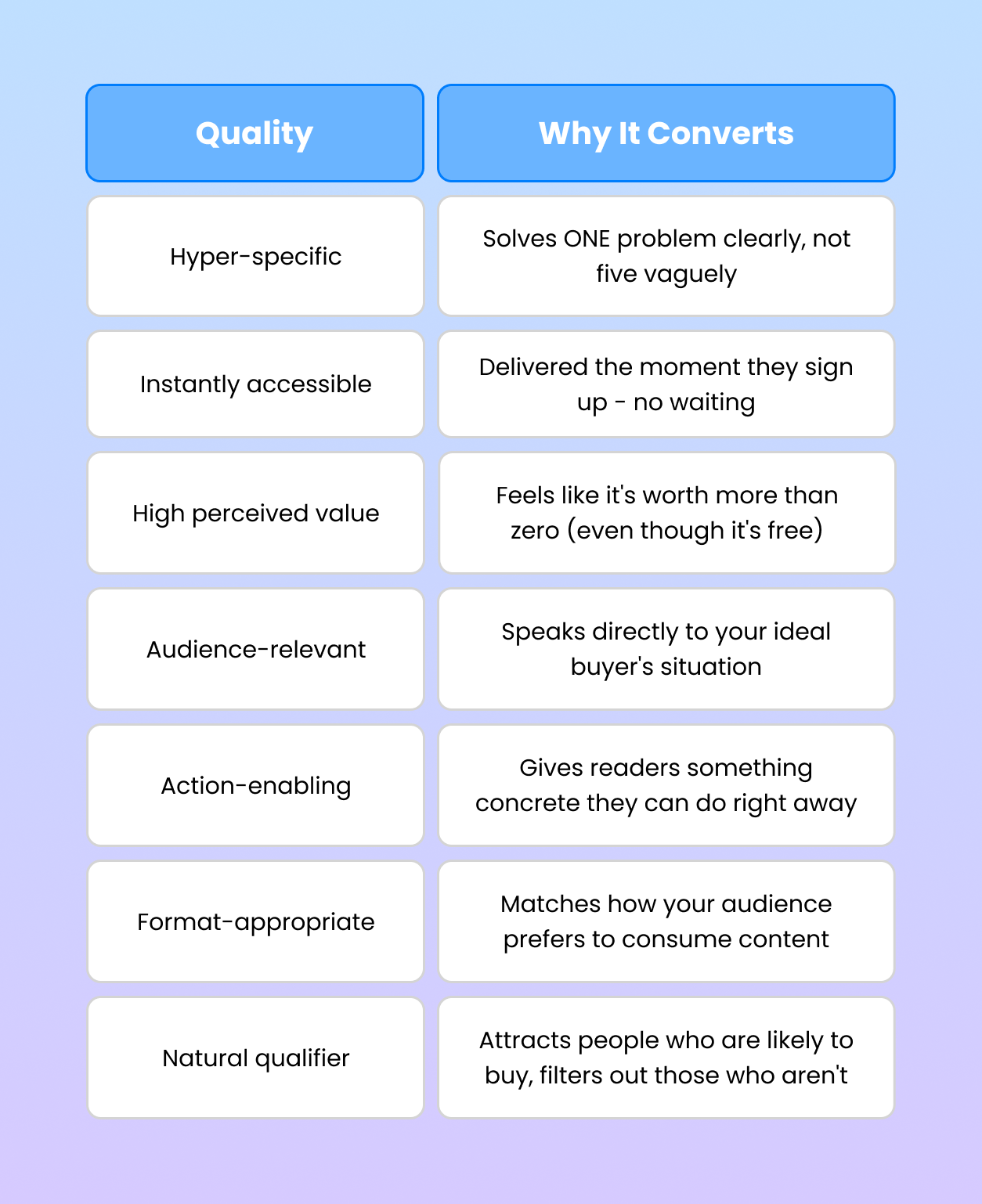
That last point is the most overlooked. The best lead magnets function as a natural audience filter. They pull in the right people - and politely bore the wrong ones. When your lead magnet is that well-targeted, every email you send starts with a higher baseline of engagement, which directly improves your deliverability and conversion rates.
25 Lead Magnet Examples
Here are 25 proven lead magnet examples organized into five categories. Each includes what it is, why it works, and who it works best for.
🛒 Ecommerce & Retail Lead Magnets
1. Discount Code
What it is: A percentage-off or fixed-amount discount delivered immediately after signup. "Sign up and get 20% off your first order."
Why it works: It's direct, immediate, and financially valuable. Around 94% of shoppers actively seek exclusive deals before buying online. A discount code removes the main barrier between browsing and buying.
Best for: Shopify stores, fashion brands, beauty, consumer goods
Pro tip: Frame the code as "exclusive" - the word alone measurably increases conversions.
2. Free Shipping Offer
What it is: A free shipping threshold unlocked by signing up. "Create a free account and your first order ships free."
Why it works: Free shipping consistently ranks as a top-three reason customers complete an online purchase. It removes a friction point that causes cart abandonment without reducing your product's perceived value.
Best for: Any ecommerce business with physical products
3. Bundle Deal
What it is: A package of multiple benefits offered together - free shipping + a discount + free returns, for example.
Why it works: Bundles combine several motivators at once and leverage loss aversion. When a visitor sees "I could have free shipping, 15% off, AND free returns," passing on the offer feels like a bad decision.
Best for: Mid-to-premium ecommerce brands, subscription boxes
4. Gift Card Giveaway
What it is: A giveaway where visitors enter their email for a chance to win a gift card. "Enter to win a $200 store credit - just your name and email."
Why it works: Low barrier to entry with high perceived reward. Digital gift card sales in the U.S. have grown more than 20% year over year, reflecting genuine consumer desire for them.
Best for: Seasonal promotions, new store launches, holiday campaigns
⚠️ Note: Giveaways generate high volume but mixed list quality. Always validate these emails before sending campaigns.
5. Product Sample
What it is: A free physical sample sent to anyone who signs up and provides a shipping address (email captured first).
Why it works: Getting someone to try your product is one of the most powerful conversion tactics that exists. Once they experience the quality firsthand, the sale becomes much easier.
Best for: Food, beverage, beauty, supplement, and personal care brands
📚 Content & Knowledge Lead Magnets
6. Ebook or Long-Form Guide
What it is: A downloadable PDF guide, typically 10–50 pages, that covers a topic in depth. "The Complete Guide to Email Deliverability in 2026."
Why it works: More than 55% of small businesses report that ebooks convert well as lead magnets. A well-written guide positions your brand as a knowledgeable authority before a single sale is made.
Best for: B2B companies, SaaS tools, finance, health, marketing
Pro tip: Solve ONE specific problem in depth rather than covering a broad topic shallowly.
7. Research Report
What it is: An original data report based on surveys, customer data, or industry analysis. "Download: The 2026 State of Email Marketing Report."
Why it works: Original data is inherently valuable and shareable. Decision-makers download reports because they need data to inform their strategies - and the brand that provides that data gets credit as a trusted source.
Best for: B2B agencies, technology companies, market research platforms
8. Sample Report / Preview Chapter
What it is: A gated excerpt or preview of a larger premium research piece.
Why it works: It lowers the commitment barrier significantly. Visitors get a taste of value before deciding to trust you with their email. When the preview is good, the conversion is nearly automatic.
Best for: Publishing companies, market intelligence platforms, premium newsletter operators
9. Checklist
What it is: A scannable, action-oriented list of steps or items related to a specific task. "The 12-Point Email Campaign Checklist - Before You Hit Send."
Why it works: Checklists are among the fastest lead magnets to produce and among the highest-value for action-oriented audiences. They respect the reader's time and give immediate, practical utility.
Best for: Marketing, operations, finance, legal - any process-heavy industry
10. Cheat Sheet
What it is: A single-page reference document with key formulas, shortcuts, sizes, or tactics. "Email Subject Line Formula Cheat Sheet."
Why it works: Cheat sheets are saved, bookmarked, and printed. Every time someone uses yours, they're reminded of your brand. A one-page cheat sheet often has more lasting impact than a 30-page ebook.
Best for: Technical industries, designers, marketers, developers
11. Swipe File / Inspiration Collection
What it is: A curated collection of real examples - subject lines, ad copy, email templates - that readers can reference and adapt.
Why it works: It offers tangible, copy-pasteable value with zero learning curve. Readers don't need to study it - they can use it immediately.
Best for: Copywriters, marketers, content creators, entrepreneurs
🎓 Education & Skill-Building Lead Magnets
12. Free Webinar
What it is: A live or on-demand video session where an expert covers a high-value topic in depth.
Why it works: Webinars tap into two powerful motivators - the desire for expert knowledge and the fear of missing out (especially for live sessions). They also allow for interaction, Q&A, and direct relationship building at scale.
Best for: SaaS companies, consultants, professional services, coaches
Pro tip: On-demand webinars extend the life of your content dramatically. Record once, gate it, and let it generate leads indefinitely.
13. Free Mini-Course
What it is: A short email-based course - typically 5–7 lessons - delivered one per day directly to the subscriber's inbox. "5-Day Email Marketing Crash Course - Starts the moment you sign up."
Why it works: Daily delivery creates a habit loop and keeps subscribers opening your emails for an entire week. By the time the course ends, they've already built a pattern of engaging with your brand.
Best for: EdTech, coaches, B2B brands with complex or educational products
14. Video Tutorial or Training
What it is: A free training video - anywhere from 5 to 60 minutes - that teaches a specific skill. "Watch: How to Set Up Your First Email Campaign in 10 Minutes."
Why it works: Video has exceptionally high perceived value. Watching someone demonstrate a process is often far more useful than reading about it, especially for software products.
Best for: Software platforms, creative tools, online services, SaaS
15. Curated Email Newsletter
What it is: The lead magnet IS the ongoing content. "Join 15,000 marketers getting weekly email strategy tips - delivered every Tuesday."
Why it works: When your newsletter itself is the value, subscriber retention is built in from day one. The best niche newsletters build devoted audiences who look forward to each issue.
Best for: Niche thought leaders, industry curators, expert practitioners with regular insights to share
🛠️ Tool & Interactive Lead Magnets
16. Free Calculator or Tool
What it is: An interactive web-based tool that solves a specific calculation or problem. "Email ROI Calculator - Enter your list size and see your revenue potential."
Why it works: Free tools encourage repeat visits, establish your brand as genuinely useful, and generate backlinks organically. Users share useful tools. They don't share ebooks.
Best for: SaaS companies, finance platforms, marketing tools, analytics brands
17. Quiz or Assessment
What it is: An interactive quiz that delivers personalized results based on a visitor's answers. "What's Your Email Marketing Score? Take the 2-Minute Quiz and Find Out."
Why it works: Quizzes deliver immediate, personalized value - two qualities that maximize conversion. Visitors feel seen, not sold to. The results also give you powerful data about what your leads actually need.
Best for: Any brand with a consultative sales process, product fit tools, personality-driven offers
18. Template Pack
What it is: A set of ready-to-use files - email templates, spreadsheet templates, content calendars, design files - that save the reader significant time.
Why it works: Templates do the work for the reader. The value is instantly obvious: "Instead of spending 3 hours building this, I can download it right now."
Best for: Email platforms, designers, marketers, project managers
19. Free Audit or Analysis
What it is: A personalized review of something specific to the prospect - their website, email deliverability, ad account, SEO, etc. "Get a Free Email Deliverability Audit - See Exactly What's Hurting Your Inbox Placement."
Why it works: An audit is hyper-personalized and immediately identifies a real pain. It doesn't just promise generic value - it shows the prospect their specific problem and positions you as the one who can fix it.
Best for: Agencies, consultants, SaaS tools, service businesses
20. Free Trial or Freemium Access
What it is: Full or limited access to your product for free - either time-limited (14-day trial) or feature-limited (freemium tier).
Why it works: No lead magnet demonstrates product value better than the product itself. Prospects who use your tool and find it helpful are the highest-intent leads you can get. They've already experienced the before and after.
Best for: SaaS platforms, software tools, subscription services
💡 VitaMail offers a free trial so you can validate email lists, run domain health checks, and generate AI-powered subject lines before committing to a plan.

🤝 Community & Consultation Lead Magnets
21. Free Consultation
What it is: A no-pitch strategy call - typically 20–30 minutes - where a prospect gets personalized expert advice.
Why it works: A free consultation signals confidence in your expertise. It also creates a direct, human connection that no downloadable PDF can replicate. For high-ticket or complex offers, this is often the highest-converting lead magnet available.
Best for: Agencies, B2B consultants, financial advisors, web development firms, enterprise SaaS
22. Access to a Private Community
What it is: An invitation to a members-only group - on Slack, LinkedIn, Discord, or Facebook - where members discuss topics relevant to your industry.
Why it works: Community access offers ongoing value, not a one-time download. Subscribers stay engaged, which means your brand stays top-of-mind. The exclusivity of "members only" also increases perceived value significantly.
Best for: SaaS companies, membership businesses, niche professional communities
23. Contest or Giveaway
What it is: A promotional campaign where visitors enter their email for a chance to win a prize relevant to your brand.
Why it works: Contests generate high opt-in volume quickly, especially when promoted across social media. They work particularly well for product launches and seasonal campaigns. Running a TikTok scraper after the campaign helps you track which posts and creators drove the most entries, so you can double down next time.
Best for: Ecommerce brands, consumer products, new product launches
⚠️ Important: Giveaways can attract a high volume of unqualified or fake emails. Always run contest entries through an email validator before sending any follow-up campaign.

24. Waitlist or Early Access Signup
What it is: An opt-in for exclusive early access to a new product, feature, or offer. "Join the waitlist - be first in line and get a launch discount."
Why it works: Waitlists capture your highest-intent leads at precisely the moment their interest peaks. The scarcity and exclusivity framing ("limited spots") amplifies the desire to sign up.
Best for: Product launches, new feature rollouts, startup pre-launch campaigns
25. Planner or Printable
What it is: A downloadable, printable planning document - a content calendar, goal-setting worksheet, campaign planner, or habit tracker.
Why it works: Planners offer tangible daily utility. Unlike an ebook that gets read once, a good planner is used repeatedly - and every time someone opens it, they see your branding. It keeps you top-of-mind passively for weeks.
Best for: Marketing, productivity, wellness, education, coaching businesses
How to Create a Lead Magnet
Knowing the examples is only half the job. Here's how to build one that actually converts, step by step.
Step 1: Identify Your Audience's #1 Pain Point
Start with your customers, not your ideas. Look at support tickets, sales call notes, product reviews, and customer interviews. Ask: "What's the one thing my best customers needed to know or have before they were ready to buy?" That answer is your lead magnet topic.
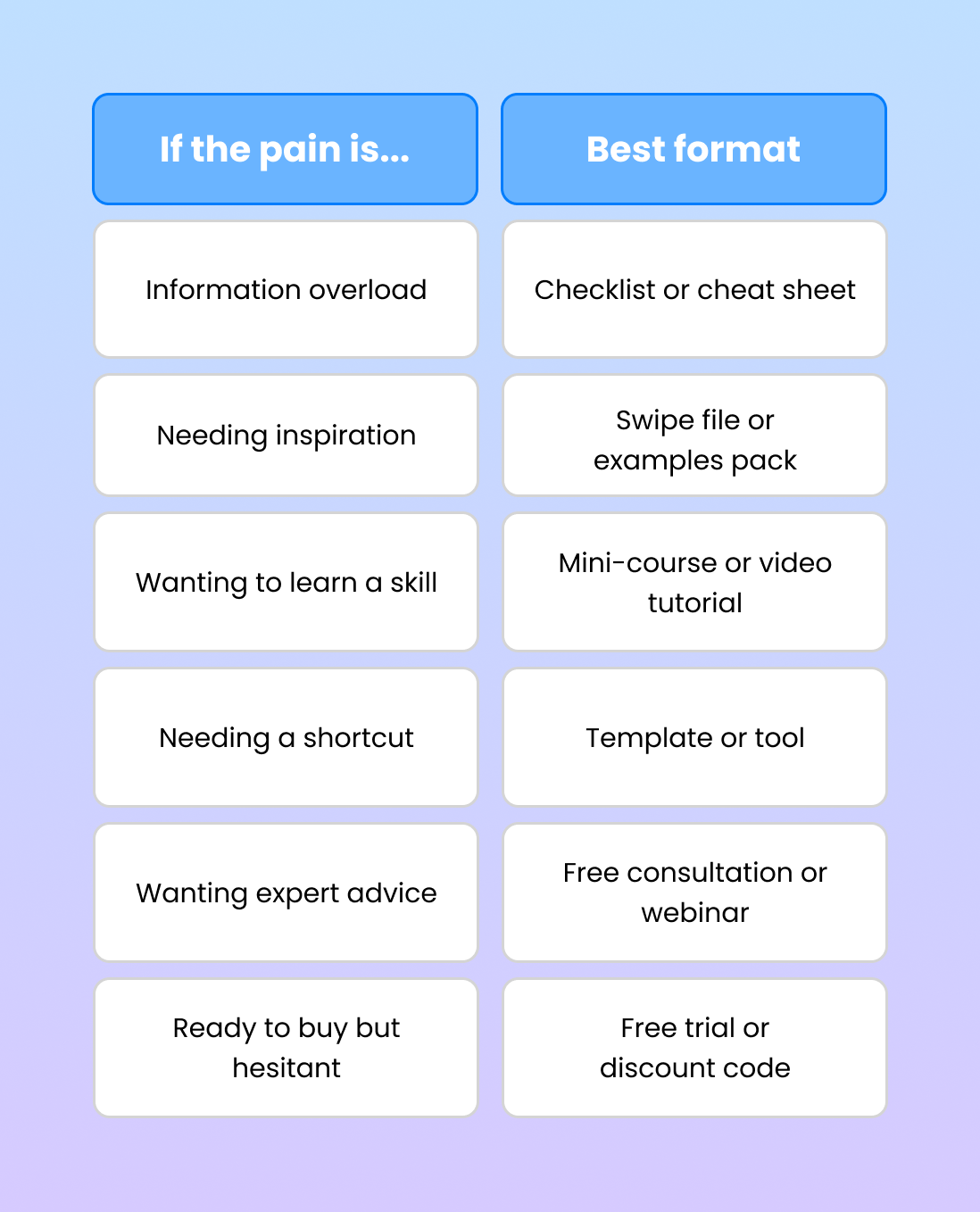
Step 2: Choose the Right Format
Match the format to how your audience prefers to consume information - and to the nature of the problem you're solving.
Step 3: Create the Asset
Keep the scope narrow. The best lead magnets solve one problem deeply, not five problems shallowly. Use VitaMail's AI Email Generator to speed up the creation of follow-up email sequences that deliver and support your lead magnet.
Step 4: Build a Simple Landing Page
Your opt-in page needs three things: a clear headline that states the benefit (not the feature), a single email input field, and a button that says what happens next ("Get the Guide," not "Submit"). Every additional field you add costs you conversions.
Step 5: Set Up Your Follow-Up Sequence
Don't stop at delivery. Map out at least four emails after signup:
- Email 1 (immediate): Deliver the resource + warm welcome
- Email 2 (Day 1): One tip related to the lead magnet topic
- Email 3 (Day 3): A related case study, story, or insight
- Email 4 (Day 7): A soft introduction to your paid product or service
Use VitaMail's AI Subject Line Generator to write open-worthy subject lines for each of these emails.
Step 6: Validate Your New Subscribers
Before you send Email 1 - or any email - validate the addresses you've collected. This is the step most businesses skip entirely, and it's the one that protects everything downstream. More on this in the next section.
Step 7: Measure and Optimize
Track four metrics from day one: opt-in conversion rate, delivery email open rate, click rate on your nurture sequence, and downstream purchase rate. If your opt-in rate is low, test your headline and offer. If your open rate is low, check your subject lines - and your list quality.
The Step Everyone Skips
Here's something none of the other guides on this topic will tell you.
Your lead magnet form is one of the most vulnerable entry points in your entire email system.
Bots fill out forms. People mistype their email addresses. Visitors use disposable or temporary email services to access your freebie without giving you a real address. Contest entries attract people with zero intent to buy. And none of these people will ever open, click, or convert - but every single one of them will hurt your sender reputation when you email them.
Here's what happens when you ignore list quality at the opt-in stage:
- Your bounce rate rises, which damages your sending domain
- Low engagement signals to Gmail and Outlook that your emails aren't wanted
- More of your emails - including ones to real, interested subscribers - get routed to spam
- Your open rates drop, your deliverability weakens, and your campaign ROI collapses
The fix is simple, but it requires a step most marketers never take.
Three things to do immediately after collecting lead magnet emails:
1. Validate every new email address. Run new subscribers through VitaMail's Email Validator to identify and remove invalid, fake, role-based, or disposable addresses before they enter your sending list.
2. Check your domain health. Your domain reputation determines whether your emails reach the inbox at all. VitaMail's Domain Health Checker identifies blacklist status, SPF/DKIM configuration issues, and other technical problems that silently tank deliverability.
3. Audit your email content before sending. Run your nurture emails through VitaMail's Spam Checker to catch content triggers that spam filters flag before your email ever reaches a real inbox.
Businesses that validate emails after lead magnet capture consistently report significantly better open rates and lower bounce rates. The leads you worked hard to attract can only become customers if your emails actually reach them.
The work of building a quality email list doesn't end at the opt-in. It starts there.
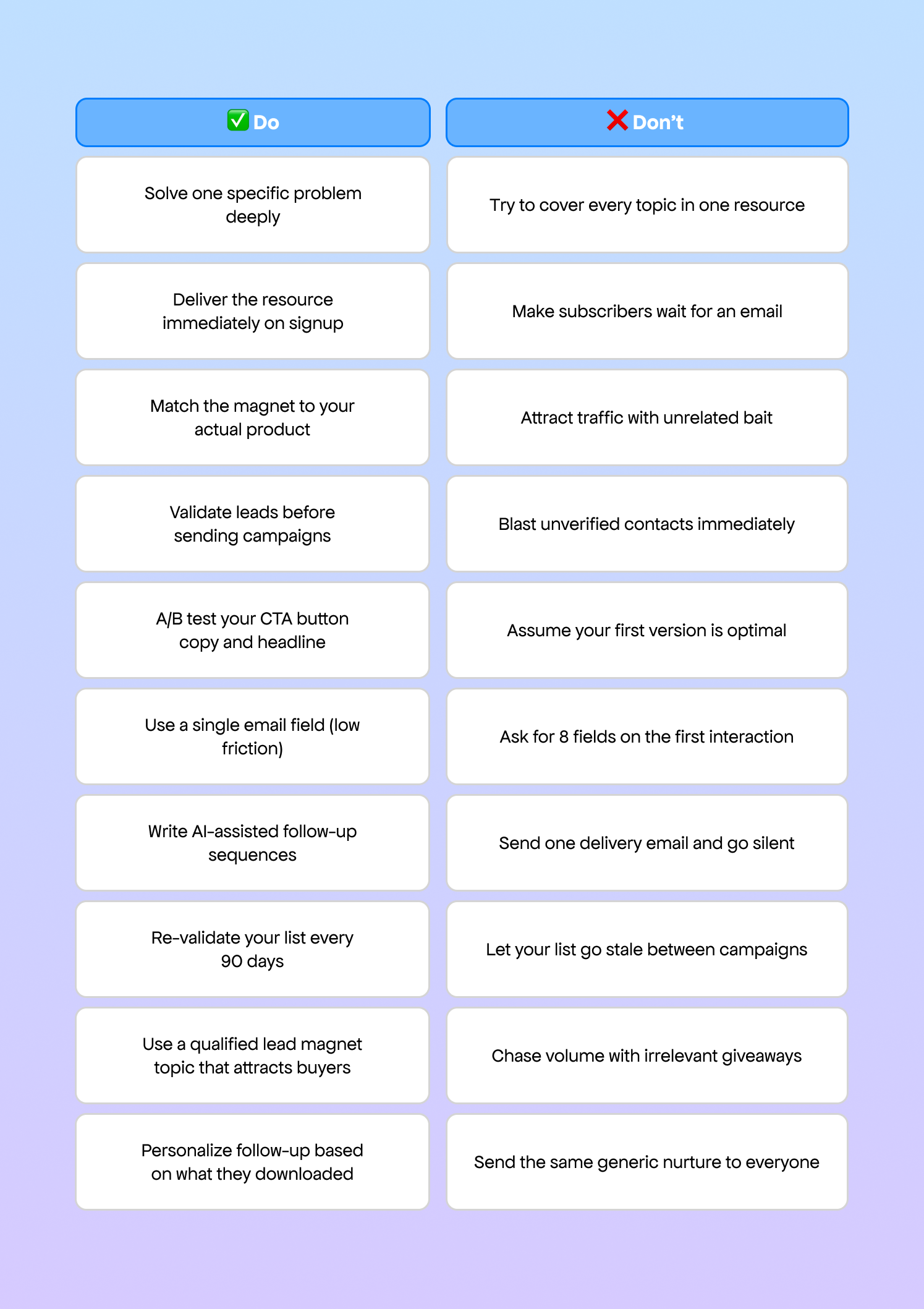
Lead Magnet Best Practices
A quick reference for what separates high-performing lead magnets from ones that generate a list you never use.
Final Thoughts
A lead magnet is one of the highest-leverage investments you can make in your email marketing strategy. Done right, it fills your list with people who want what you offer, gives your brand a reason to stay in touch, and creates a repeatable system for turning website traffic into long-term customers.
The 25 examples in this guide cover every major business type - from ecommerce discounts and B2B research reports to interactive quizzes and free SaaS trials. The right choice for your business is the one that solves a real, specific problem for your ideal buyer, delivers instant value, and naturally attracts the kind of subscriber who becomes a customer.
But capturing emails is just the beginning.
Every address on your list represents a real person - and a real inbox that your emails have to earn a place in. Fake signups, mistyped addresses, and low-quality leads from poorly targeted magnets will quietly undermine your deliverability, suppress your open rates, and drain your campaign ROI.
The businesses that win at email marketing aren't just good at attracting leads. They're meticulous about the quality of every address that enters their list.

Validate your email list, check your domain health, scan your content for spam triggers, and generate AI-powered subject lines and emails that actually get opened - all in one place.

